Sunday, July 18, 2010

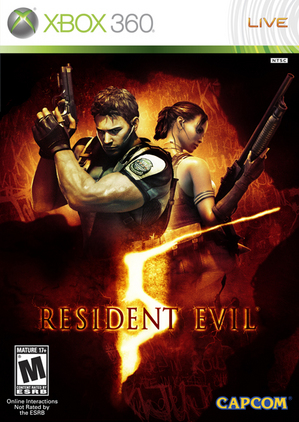
Resident Evil 5 (video game)

Platform: X-Box 360, Playstation 3
Developer: Capcom
Genre: Survival Horror
ESRB Rating: M
Release Date: March 13, 2009

So with this game, the Resident Evil franchise finishes its metamorphosis from survival horror to something more akin to survival action.

That's probably an unfair statement, as it implies Resident Evil 4 led this series down this road. While it's true the last game changed the series a great deal from prior installments, it still kept it's roots firmly in horror and surviving; you just had a new playstyle and ammo wasn't as hard to come by. But this game seems to eschew it's origins the rest of the way.

The story is where the oddities begin. Honestly, it's nice to play as Chris Redfield again. It really is. But the story he's surrounded in isn't exactly befitting. Mostly because there isn't much story until about halfway in. You never really found out much about what was going on until about that point in prior games, but there was often an air of mystery to them and intrigue. Also, prior games had files, which gave a great deal of backstory to each title and at times even upped the creepiness factor. Here they're almost entirely absent - aside from the occasional entry - the ones that do exist are no longer logged and it's all sorely missed.

The origins of the different viruses are revealed in this game. Unfortunately, it's less than inspired. Without spoiling it, it can be said that the roots of the entire franchise is now tied to one thing that, in a way, seems to diminish the concepts as a whole. Saying that perhaps Umbrella's culpability is lessened due to the roots being in something born in nature would be going way too far, but the franchise loses something with this revelation. Much of the mystique is now lost and what was once entirely the screw up of a morally bankrupt, faceless company content to create viruses and bioweapons now has roots in nature. Maybe it isn't as big a deal for anyone else; for me, however, it felt like something about the dynamic of the series had changed and not in a good way.

Capcom has said that this game is, in effect, something of an end to several different plots regarding the series - mainly series baddie Wesker and his overall goals - and they hold to that, but it doesn't feel earned. Before now, Wesker's motives seemed mysterious and something you wanted to know about. Here, all that is gone, as Weskers plan turns into a typical "blow up the world and become ruler of what's left" story, almost as if the developers just finally got bored with the franchise and just straight up wanted to end most of the series running plots in this game by hook or crook. It's a startlingly bad turn for the series most interesting villain and also provides an unsatisfying ending to, at the least, the plots that have spanned much of the franchise.

Speaking of villains, many of the others in this game are uninspired. Ricardo Irving in particular - Brooklyn accent and all - has to be the absolute lamest villain ever to appear in the games; keep in mind this is a franchise that saw Ramon Salazar. Considering the increasing focus this franchise has taken in the past several installments on human antagonists, it's almost distressing that they've gotten progressively more lame as the series has gone by.

The setting of the story is also a problem. Not, of course, because of the dumb racism cries. To tell the truth, there is absolutely nothing about this game tied to it's setting in Africa. When I'd first heard the game was to take place in Africa, I'd expected the game would deal heavily in the mythology surrounding the country. It is, after all, the birthplace of the zombie concept, which has it's roots in African voodoo. While there is the occasional reference to things related to the country, for the most part it's an interchangeable setting. It could have been set in just about any third world country and the only thing lost would be the outrage over "racism". It's a missed opportunity of the highest order and enough to make you weep for the lost potential.

But what about the horror elements, you may ask. Missing, for the most part. There's almost nothing new or scary in this game. Ninety percent of the enemies in this game are rehashes of enemies from Resident Evil 4, right down to an El Gigante clone. Hell, the only difference between Ganado's and the Majini are skin color. The most exciting thing to happen in regards to the enemies is the return of a classic series monster late in the game. Even the traditional Mercenaries mode is the same as last time. For that part, it's not such a big deal, but you'd think they could have added something new to the minigame to spice things up a bit. I guess not.

As you can guess, there's an air of plain to it all and it saps any frights from the game. The last title used it's setting and the unfamiliarity of it all to great effect, managing to create tension despite the then new play style. This game takes place in the daytime, against enemies you're intimately familiar with and expect, with absolutely no surprises. In development, they seemed to have different features going that would have brought out a sense of horror, including the possibility of hallucinations a la Eternal Darkness if you were out in the sun too long. It's all been scrapped in favor of absolutely nothing you haven't seen before.

The gameplay remains largely the same as the last entry. Except, of course, for the great touches that made RE4 awesome. The game is divided into Chapters and each of the six have two, maybe three, sections; in other words, they basically revived the level concept in a game series that's supposed to be about horror, exploring and puzzles. Speaking of puzzles, there are none. The most you'll have to do is fetch some emblems to open a door or guide a laser into a target to use an elevator. Yeah. The inventory system has also been overhauled, dropping the fun and interesting briefcase system for a far more limiting and cramped plain jane style.

As you can probably guess from how I harp on the linearity, the game is impossibly short. Not to mention linear. When I say linear, I mean you're on a straight path through the entire game. There are no detours, puzzles or sprawling mansions to search. You start a chapter in an area and you go from point A to point B, rinse and repeat; there isn't even a merchant anymore, as you'll do most of your buying and selling between chapters and sections. This also helps make the game horribly short; if you knew what you were doing in the old games, you could speedrun them for low times and bonus weapons. In this game you're not likely to finish in too much more than six hours unless you basically screw around in each level, taking your sweet time; and why you would bother I haven't the foggiest, since there's nothing to do in each level besides look around for some emblems to shoot for a few unlockables.

Of course, I suppose you could always do what I did; stand around a few minutes from time to time, wondering just what the hell Capcom was thinking when they made this game.

The Score: 6.5 out of 10

In short, this game does not even come close to living up to the standard set by Leon Kennedy's adventures in Europe. If Capcom is bored with this franchise, then it shows. The whole project feels cobbled together primarily to give some kind of "closure" to the series rather than actually make a fun game. You may find some enjoyment in the game as a straightforward action game with RE4's play style, but otherwise this game is just a heaping plate of meh with a side of what-the-hell-Capcom.

Sunday, July 4, 2010

Op/Ed: Batman the Urban Legend

Lets face it. Some ideas are dumb as hell. No amount of explaining will really fix it. But every so often one of those ideas comes along and the people in charge absolutely insist on forcing it down our throats. You see it every so often in television, wrestling and even comic books. Eventually they may well learn their lesson and move on, but their folly has still become part of history and they may even be convinced that they had the right idea regardless.

I really view the dead end concept of Batman as an Urban Legend in Gotham City as one of them.

To start off, I should say that it's not without merit in some situations. In the early years of Batmans career, it makes sense that it would be an image he'd cultivate for a while to scare the crooks. So it works for stories usually set in the "Year One" era. Also, using it in alternate universe stories isn't exactly a bad thing either. There are a couple that work pretty good.

It's when they've tried applying it to the main Batman comics that there's been a problem.

And try they did. Back in the 90's - when Grim and Gritty was all the rage - the Bat offices were really pushing to keep Batman out of the greater goings-on of the DC Universe. After Frank Millers stories saw great success, the Bat offices wanted him pretty much on his own. They campaigned to have his entire Justice League tenure removed and even went so far as to directly retcon him as an Urban Legend to Gothamites during Zero Hour. Needless to say, they were pretty intent on shoving this concept straight down our throats without so much as a glass of water.

It's not hard to see why. They weren't stupid. In an age when dark heroes were vogue, Batman had become their lynchpin for this. But having him hang with colorful dudes in tights doesn't really work for the image they were cultivating. Same for him being involved in every world crisis. So they wanted to remove it on that short sighted basis.

I've known quite a few people who would probably embrace such an approach. The concept of "the grimmer the Batman the better" is all to prevalent with some folks. So making him an urban legend in Gotham that scares the wits out of crooks and growls at any hero who dares even think of setting foot in his city? Works for them.

I honestly feel they're wrong.

Let's face it, the urban crime fighter approach is limiting. Batman has done it all in the long years the character has been around; and while the alien fighting campy days aren't something I'm anxious to see return, keeping him a dark urban commando is something I want to see just as little. What's great about Batman is that he's a character that can withstand many different interpretations; an aspect that should be embraced, not shunned.

But moreover, it's just a flawed concept. The notion of Batman being an urban legend is laughable because the character honestly never stopped being put in grander situations. Oh sure, in the Batman titles they played lip service to the urban legend deal, but meanwhile Batman was chillin' with the other heroes fighting to keep the sun from going out or whupping some White Martians. These are world altering threats that affect everyone with great visability. So the rest of the DCU knows about Batman, but Gotham doesn't until a good while after Batmans participated in many world altering events. See the problem?

On top of this, said concept forces you to take huge leaps of logic. I mean, we've got colorful guys running around like clowns, scarecrows and Alice in Wonderland characters. So who fights them, often in the open? Batman. Those guys are big news and they expected you to believe that every time one of them popped up, made a stink and were caught, no one saw or acknowledge the big dude dressed like a Bat. So who did they think caught those dudes? The police? And how could the two bit hoods and mob bosses not hear about this Batman and take it seriously? News would travel through the underworld and while you could believe they'd cop to the urban legend bit for a while, eventually they'd get wise. Especially with all the guys Joker, Two-Face and so on employ who are routinely beat up by Batman and thusly know he exists.

"Gosh golly gee! Jokers tried to poison the Gotham Reservoir again! What? He's in Arkham now? Who stopped him? The Batman? Naw, he's just an urban legend! Despite the eight times this has happened in the past, I know Batman has to be an urban legend because... umm... well... well of course he's an urban legend!"

Even if you somehow manage to buy into the concept for Batman - and I honestly don't see how - it's kind of hard to miss the kid in red, yellow and green who frequently traipses around with the dude.

Also of note is the fact that when they tried to do this, major crap went down in Gotham. At least two major viruses and an earthquake happened in the intervening years that Batman combated. So, during all that, which Batman struggled to find a cure for and worked with the police, he was just an urban legend. Not to mention that Batman was in the main JLA during the time. But he's an urban legend. Right.

On top of all this, it's impossible to do without a complete continuity wipe. Obviously, that's not an attractive option, because it wipes out a lot of classic Batman adventures from the timeline not to mention screws with DC history even more. So they just cold altered it in Zero Hour to make him considered an urban legend.

As you can guess, this causes major timeline issues. People always considered him an urban legend, but this can't be possible. After all, what about the time when the Joker tried to murder the entire UN and Batman was there to stop him? What about when Batmans back was straight up broken and he was laid out in the street in front of numerous bystanders as Bane shouted his triumph? The replacement Batman? Hell, the entire Knightfall saga that had wrapped literally months prior? I mean, Bane showed up during the urban legend era, so... yeah. Or hell, how about the story that happened only a couple of years prior where Batman saves the president from the KGBeast? The Killing Joke? The Cult?

It's really insulting to the intelligence, all for a concept that did absolutely nothing for Batman comics. Who can name a great story from that era that required the urban legend deal? There weren't any. It was arbitrary and pointless. At least when Spider-Mans marriage was straight up erased, it brought back loads of potential that led to great stories. The Batman urban legend gimmick was just a useless attempt at trying to keep Batman as much the impossibly, insultingly dark urban commando that had become popular. Nothing more than a vanity gimmick that served little purpose and just made things troublesome.

Also important is the fact that by this point in his life, Batman didn't need to be an urban legend. He was the ultimate hero of Gotham who was the best of the best. While early in his career, you can make the case that he may have needed to cultivate an urban legend gimmick to strike fear into people, that late it's unnecesary. The crooks are frightened because they know when Batman arrives on the scene, they're done. He will beat them senseless and they will go to jail. That's worse an any urban legend; after all, can you imagine the tension a crook would feel, knowing that Batman could drop down at any moment and if he did show up they were definitely going back to jail with a concussion? You can't buy a reputation like that.

Eventually, they finally decided to drop the idiotic plot point. I believe it was at some point during the course of the epic 1999 Batman saga No Mans Land. It wasn't soon enough.

Beyond that though, why would someone want Batman pigeonholed so heavily into that dark, mythic aspect? As we've seen over the course of the last decade, there are so many things you can do with Batman that it seems idiotic to limit him so. Which makes it so baffling that they honestly tried; it really is one of the dumbest ideas put forward in Batmans long history, in my opinion.

Batman can be the urban commando, he can be the swashbuckling hero, he can be the ultimate survivor and he can be the time traveling man-god, but I honestly believe he should never be one of those exclusively.

Wednesday, June 9, 2010

Batman #700 review

Alright, so Batman #700. As you may or may not know, I'm not a single issue reader. I'm a trade man. I rarely make it to the comic shop. Usually only on special occasions. But this is a special issue, so it warranted a special trip to the shop. Also, it necessitates a review.

Let me tell you, Batman #700 is a goddamn trip and for me was a perfect celebration of the hero I've worshiped since childhood.

First off, let me tell you that I appreciated the structure of this anniversary issue greatly. Many milestone issues have a usual structure that you can pretty much set your clock by. Often there's a lead story that takes up a good three quarter of the pages, several couple-pages-a-pop stories from different creative teams plus bonus material in the back. For the most part, Grant Morrisons Batman #700 bucks that trend. While the back extras are there - some cool art from different artists along with a several page in depth look at the Bat cave - Morrison handles the entire story from start to finish, split up into three main chapters and a small extra one that each represent a different era of Batman. This is great, as Morrison hits many of the notes you might normally see in an anniversary ish in his main story.

The story itself is a bit more simple than many Morrison tales, and yet it's not. The story is a mix of murder mystery, generations and a hint of time travel. We start in the Silver Age trappings - Bruce as Bats, Dick as Robin and Joker as his goofier Silver Age self - hit the present - Dick and Damian in the respective roles - and finish in the apocalyptic future Gotham of Damian Wayne's Batman, with the connective tissue being the central mystery that unfolds in each time. There's nothing else that needs to be read to understand this story; the only link to current continuity is a mention of Dick and Damian looking for hints to find Bruce Wayne. It's a standalone story with everything you need to know in it's pages.

In this way, Grant Morrison really celebrates Batman and the legacy. Carried through different iterations of Batman, we get a sense of the history behind the cowl. But the final few pages are what really drive it home. To tell you what they are would spoil them - and I'm not even going to mention the joy inducing element of the Damian Wayne Batman chapter - but what it says about Batman is powerful.

In one story, Batman is boiled down and we come away with one message; no matter what, there's always hope, because Batman lives forever.

Artistically, the book is great for the most part. Tony Daniel handles the Silver Age-ish chapter. In some ways, it's an odd fit; his work looks a bit modern for a Silver Age flashback story. But it's still good. Frank Quitely turns in fantastic art for the "Present" chapter. Andy Kubert returns to illustrate the future we glimpsed on Batman #666, turning in some nice work as well. Finally, David Finch finishes the issue, illustrating the "... And Tomorrow" chapter. It's great stuff and the chapter breaks cleanly allow the shift to the different art styles for each chapter.

To say it's a total homerun is a bit misleading though. Unfortunately, it seems Frank Quitely couldn't finish three or so pages in time. So the last couple pages of the "Present" chapter is filled in by Scott Kollins. Usually his work is good - and here he takes on an interesting painterly style for those last few pages - but it's jarringly different from the rest of the chapters art. I imagine it's going to be jarring for some people. The ball was definitely dropped here; it's a small blemish on something otherwise excellent. Thankfully, everything else is awesome enough to forgive it.

The extra stuff at the back is nice as well. For the money, we get a bunch of different Batman drawings by all sorts of artists; an interesting and eclectic assortment to be certain. There's also several pages showing an in depth look at the current Bat cave handled by Freddie Williams II. Not Earth shattering stuff, but some cool stuff to look at after the main story.

All in all, I'd call this anniversary issue a success. It truly felt to me like a celebration of things that make Batman among the greatest fictional heroes of all time. In the past, some of Batman's anniversary issues have been tied into other things - #500 had Jean Paul Valley under the cowl while #600 was a part of that long running Fugitive storyline - but this one is great and truly standalone. Grant Morrison does it again, to no surprise of mine.

As cliche or corny as it may be to say this, here's to seven hundred more.

Tuesday, June 8, 2010

Op/Ed: DC and the Legacy Concept need a divorce

You know, once upon a time, I actually used to think the legacy concept was pretty cool. A highlight of DC. New, younger characters take on the mantles of the old one and attempt to bring their legacy to new places. That a company seemingly based itself around it kind of pleased me. I'd be like some other fans; bringing it up whenever I list what I liked about the DC Universe.

Kind of funny how your opinion can change over the course of a year or two.

DC's seen quite a bit of restoration lately of the best known iterations of it's heroes. Hal Jordan seems to be the one that ramped it into high gear. Now we have Barry Allen back as well, once one of the untouchables in the dead pool. Ray Palmer's even back as the Atom; of course, DC stupidly killed off replacement Ryan Choi, which unsurprisingly set the internet off yet again. Legacy doesn't seem quite so important now, does it? Despite, of course, the fact that DC still uses the damn word left and right in just about any press release. They've even got a damn book out called "DC: Legacies".

It needs to stop.

The legacy concept is really nothing more than a smokescreen, but no one seems to realize it. When you strip it down to it's essence, it's a buzzword mostly used as a differentiater from Marvel and their more "grounded" approach. Does the legacy concept really mean that much to DC? It might, but the company needs to realize something we all should. The legacy concept is nothing more than a short term boon that causes grave complications down the road.

Let's look at it from the ground first. On paper, the idea sounds good. A universe of heroes where the mantles are passed down amongst a line of heroes who become a part of it's legacy. Sounds good right? In a finite story it would be. Like all things that sound good on paper, when you put it into practice, the problems start.

Replacing a hero is tricky business. Right from the start you're causing problems. When you replace a hero with a new, shinier version, you are going to piss someone off. I'm sorry. It's going to happen. Not an issue when you deal with lower tier heroes like Blue Beetle - hell, Jamie's probably better known and more popular than Ted Kord ever was - but doing it to the bigger heroes is nothing but trouble. Even if the character takes off - take Kyle Rayner, for example, who is a relatively popular hero in the Green Lantern mythos - you're still angering a great many others to do it. We'll stay out of the circumstances surrounding Kyle's introduction, since that's a whole 'nother powderkeg.

In truth, when you do that, you've placed a time limit on how long they can carry that title. Is it really a mystery why DC has gone back to the most recognizable versions of their heroes? I don't think so. I mean, who really gives a goddamn about Conner Hawke aside from a small group of people? What about the most recent Firestorm? The only complaint I ever hear about him being dropped back in the equation is that now it's no longer someone with ethnicity; and while I'm all for a more diverse DCU, if that's the main reason people don't want him shunted off, I find it kind of dumb.

DC doesn't seem to get that replacing the most recognizable version with a new guy just never really works out. The most recognizable and successful shift that they ever did was with Wally West becoming the Flash and it took a defining run by Mark Waid to really cement it. Surprise surprise, here comes Barry Allen back. The worst part? It just undermines the last bit of credibility the legacy concept had in the DCU. The only change that stuck? The switchover from Barry to Wally. The Flash was the only true legacy of the DC universe; now that it's reverted, it's hard not to see the concept as a joke.

On top of that, a lot of the replacements are inferior characters. Sure, you've got your Jamie Reyes, but for every one of him there's a Conner Hawke, a whoever-the-post-OYL-Aquaman-was and a Freddy Freeman as Captain Marvel/Shazam. Even if they're not, they've got the unfortunate distinction of riding on the coat-tails of the previous one. What's the number one story you can do with a new hero in an old mantle? Trying to live up to the legacy of the old one. After that, unless you've radically changed the concept and made a new world surrounding them, it's someone else playing with the previous guys toys and it's rarely ever as good. Then the old guy inevitably comes back and just what the hell do you do with the replacement? Kill him? Limbo? Both options will piss off the fans the replacement does have. See Wally West at the moment; DC seems to have no freaking clue what to do with him right now. Give him a new identity? Not going to please his fans. They see him as the Flash and think it's his rightful title. Give him the Flash title? Well, then what can you do to possibly please Barry Allen fans?

All this ends up causing strife in the fanbase. Sure, we all love Kyle Rayner. Hence why a lot of folks did not want Hal back. But then there are just as many, if not more, who did want Hal Jordan back. Don't they have as much right to want the old guy back? But then what about the new guy? Which leads to "which one is better", which leads to bitterness, fan entitlement, arguments and anguish all around. All to give somebody elses gimmick to someone new. You don't see things like wrestling pull this crap for good reason; could anyone really stand an argument about which is the better Rock or Stone Cold? Imagine trying to give a new guy the Hulk Hogan name and gimmick.

It's a useless move, on top of all that. How many of DC's huge stars were born of legacies? You could say two if you wanted to go the Green Lantern and Flash argument, but they did not replace; Barry Allen and Hal Jordan were a radical shift of the concept to the point where the only real similarities were basic powers and a name. Besides which, the originals are still around. Batman, Superman, Wonder Woman, Aquaman, Martian Manhunter, Green Arrow and so on were not born of legacies. So where's the benefit here? Instead of creating new characters - which admittedly would have to sink or swim - DC replaces old ones with new characters for the quick benefit of name recognition. Please tell me someone other than me sees this as retarded.

Then there's the point where you put established heroes under another persons identity. That just makes things even worse. Now not only have you replaced the old guy, but you've put on the back burner the mythos surrounding the replacement in his other identity. Cool for the short term, but eventually you're doing nothing more than deliberately not using the toys you've created. See Dick Grayson currently as Batman; keep him under the cowl and everything built in the twenty years under the Nightwing identity is put on the back burner, because it has no place in the Batman trappings. But ahh, then you have the problem of "someone else playing in another dudes world". Not really a wonder that Grant Morrison took the "change the entire feel and create new stuff" route for his story of Dick filling in for Batman, but even that can't sustain forever without keeping valuable toys in the toybox.

Then multiply all that by the fact that this "generational" BS causes aging problems with the heroes that aren't replaced and you may as well just shoot yourself in the foot with a gun and save yourself the trouble.

I understand why DC tries this. Really, I do. It's not easy to get new characters to work in comics. Call them small minded if you will - I certainly have a low opinion of fans in general - but they're not likely to outright buy into new characters. It takes a good amount of luck and exposure to hit the right note and it's never guaranteed. With putting someone new under an established identity, it brings instant cred and recognizability to build them with. You've got a much better chance of surviving and being fleshed out under an established property than you do on your own. But it just doesn't work.

In the past twenty years, how many great new characters have been created? Not many, right? Most of the great ones were put under established identities. Where are they now? Kyle Rayner lucked out; the Green Lantern Corps is a concept that allows for several Green Lanterns. Guys like Conner Hawke and Ryan Choi aren't that lucky. Then the old guys come back and what are you left with? Supporting cast at best. Not new heroes. The safe bet of the "legacy" produces horrid results if we want to face facts. Throwing new heroes out there may be a calculated risk, but when it pays off, if pays off big; when you stick with a legacy, you may get some recognition for the characters, but you guarantee yourself problems down the road unless the original character under the cowl was forgettable or just a bad character.

To sum it up, DC and "legacies" need a divorce. Over time I've slowly come to realize just what a spiderweb of bullcrap the very concept spins. I now honestly feel it has little place in most superhero concepts. Just think, this concept has dominated comics in a way since that dreaded, horrid age we call the 90's. Worked out great, dinnit?

Thursday, June 3, 2010

Grand Theft Auto IV (video game)

Platform: X-Box 360, Playstation 3
Developer: Rockstar North
Genre: Sandbox Action-Adventure
ESRB Rating: M
Release Date: April 29th, 2008

It's been rated ten out of ten by many magazines across the board. Critically, it's acclaimed; I've seen some people call it 2008's perfect game. As usual, Rockstar created a firestorm among the gaming populous.

With that in mind, it has to be said; Grand Theft Auto IV may be the most over-rated game in years.

I realize that's a lofty statement to make in the very first paragraph, but it's not a conclusion I came to lightly. I played Grand Theft Auto from as far back as before it hit 3D with the third installment. Needless to say I'm a fan. But the Grand Theft Auto franchise is synonymous with top notch quality; so when it disappoints, it disappoints big.

None of this is to say that the game is bad. But the franchise may well be it's own worst enemy. The last full installment of the franchise was San Andreas, which is without a doubt the pinnicle of the franchise thus far. The games have gotten progressively better over time. So with that, you expect each installment to top the last. Grand Theft Auto IV just doesn't manage, falling short of the lofty heights the franchise achieved with San Andreas.

To start with the good, it must be said that Grand Theft Auto IV contains one of Rockstars most fully realized stories to date. It's probably the best one so far as well; only San Andreas can really measure up, but I felt that in this respect, IV reigned supreme. You follow Niko Bellic, an immigrant into Liberty City relatively fresh from horrifying experiences in war. He's looking for something and he may not be entirely sure what it is himself, be it a fresh start, achieving the American Dream, escaping his past or maybe to simply settle his past outright. Niko feels relatively real as a character; he's conflicted, the things he ends up doing in Liberty City weighing on his conscience, which is a marked contrast to previous protagonists. He wants to make ends meet alongside his goofy cousin but always seems pulled into the seedier elements of the city. To put it simply, the story feels very human in a way previous games did not and in this respect the game is something of a triumph. Rockstar also delivers their usual cast of memorable characters that you won't soon forget.

Graphics are good, but not great. Perhaps it's just me, but the game did not look as sharp as I had hoped it would. It's not a huge issue, however; it's still leaps and bounds past San Andreas in this department. Also, Liberty City truly is lovingly based on New York City. The detail in the city in comparison to the real thing is awe-inspiring and at times almost eerie. There should be a lot of props given for the attention to detail given.

The sound is great, as always. Voice acting works very well, as expected. The soundtrack is an eclectic mix of real life music across it's many radio stations, as is common with the series, from ZZ Top to Bob Marley, so there's always something to listen to that might suit your taste. The talk show stations are back, including Lazlow and are suitably amusing.

How the game plays is pretty much how it always has, but with improvements. Driving and aiming are on the triggers now though. Perhaps the biggest improvement in the area of gameplay is the gunplay. Whereas in previous games it was at times cumbersome, it's gotten something of an overhaul in this one. Stick sensitivity is used for aiming to great results; now, when you lock on to an enemy you can use the right stick to fine tune to specific body parts while a hard flick or press in a direction will cycle to the closest enemy in that direction. This leaves it so that if you get good enough you'll be headshotting fools left and right; a very useful ability in later missions in the game. Other minor improvements stick out as well; you can now free-aim while driving in cars, tires will actually rip off the rims when shot out and it's a good idea not to collide with most things at top speed anymore, because you will go flying out the windshield now when that happens. On top of that is a taxi system that will allow you to zoom to a destination instantly.

Instead of a pager or an uncontrollable cellphone, in game messages now center around an in-game cellphone that you have full control over this time, which is another welcome addition. This brings along a massive improvement in replaying missions after you die; no longer will you need to hit the marker again, trip skip or whatever thing was done in the past. After you die, you immediately get a text message asking if you want to try again; confirm and bam, mission engaged. The cell phone can also be used to call cops or paramedics to your immediate area via 911, which is useful for obvious reasons. On top of that, the cell phone allows you to keep track of all the friends and dates in the game; hanging out with them is as simple as getting a phone call to set it up, or you could just buzz up a character to talk, about recent missions or otherwise. Hanging out with friends opens up a bunch of activities, from bowling to pool to playing darts, all fun in their own right. There's also an in-game internet system now that's good for some chuckles, with the usual Rockstar parody of social issues and the media.

In other words, the core experience has received some very welcome very needed and long overdue revisions to improve things; but sadly, the core experience is where the improvements end, as too many small things wrong add up elsewhere.

As I earlier praised the story for being probably the best in the franchise so far, it's not without it's failures. Some plot points are dropped to some degree as the game goes on. Some are minor and usually on purpose, but there's one very late in the game that practically slaps you in the face. A character is introduced early in the game as significant to Niko's past and the character makes Niko's life hell. But before the end of the game, this character and the plot points he represents simply vanish from the game entirely. Most of Niko's story in the game involves his past and his attempts to both put it to rest and wrestle it out, so to have a decent part of it introduced and not concluded is just sloppy.

As far as the gameplay itself goes, the story also somewhat hampers it. The plot is such a street level, low fish in the pond story of crime that it presents something of a glass ceiling. The more outrageous and fun elements of past GTA's have no part because of it and mission variety plummets to a absolute minimum. Missions now tend to boil down to going to someplace and killing folks, chasing someone down, retrieving something or some combination of them with a variable or two. Unlike previous games, rarely is something new thrown into the mix, so it gets very old, very, very fast. Halfway through the game, some missions can simply get outright boring.

Worse still, much from past games have been removed outright. A short list of things removed entirely are planes (helicopters are still present), parachuting, the stat's system from San Andreas, owning property, types of vehicles are halved and many of the special, more outlandish vehicles from past games are gone. Clothing options are carved down to a paltry amount, choosing different fighting styles is another culled option, the RPG style system for upgrading proficiency in things like weapons, burglery, car modification and gang warfare/territory dynamic are all gone. Oh, and Rampages are absent entirely. This is only what I can remember. The amount of features from past games that are missing is both staggering and horrifying. To this end, Liberty City at times feels somewhat dull and devoid of fun; there can be so little to see and do anymore that it feels like the franchise has taken a massive step backwards to the GTA III level, maybe even further. If this were simply a case of "cutting the fat" it would be one thing, but there is way too much lost in transition.

On top of that, a lot of what remains is neutered. The side jobs that were around in past games are also reduced in number; the paramedic and firefighter missions in particular are nowhere to be seen. The ones that remain carry little incentive to bother with. Whereas there were rewards for going the distance with side jobs - things like weapons in the safehouse, upgraded health, upgraded armor capacity and so on - you receive absolutely nothing for completing the side jobs this time. Just achievements. That's it. If you could care less about those there's little reason to bother with most side activities aside from some cash, which you'll get more than enough of once the missions get a head of steam.

Speaking of which, with many of the downgrades, money becomes as useless as it was in GTA III, where it wasn't much more than a glorified score counter. There's next to nothing to buy with it except guns, ammo, food, cab rides and hookers. It may as well amount to a score, because it serves little purpose otherwise. All of which I just mentioned in the past few paragraphs are just the subtractions I can remember. If I were to go back through and check for other things the game lost in transition - not to mention small things it does wrong - we could be here all night.

It may seem unfair to compare the game so heavily to other games, but it does not exist in a vacuum. Grand Theft Auto is a premiere franchise with high expectations. When the game offers as little as a typical GTA clone when the franchise often took leaps forward in the past, it's damn noticeable. Even just sticking to the franchise itself, there hasn't been as little to do since Grand Theft Auto III; and even that features things this game didn't.

Also, I'd be remiss if I didn't mentioned that the franchises long time annoyance - graphical pop-up - is still around. It's not quite as bad as in the past, but as always if you go too fast the texture will be gone from the surroundings for a couple seconds. It's been seven years, a full console generation and four games since Grand Theft Auto jumped to 3D. That this is still not under control after all that time seems outright insane.

This game made me feel massive disappointment. Seriously, I often enjoy games despite their flaws and I'm much kinder to some games than some of my friends. I rarely feel the kind of disappointment and boredom this game brought. From Rockstar no less. What the hell happened?

The Score: 7.5 out of 10

The basics are there, but at heart, Grand Theft Auto IV just doesn't cut it. Compared to the past games in the franchise, it falls so far short that it's maddening. But it's not a bad game. There's still enjoyment to be had, but it may take warming up to; I personally lost interest in the game the first time or two I'd played it before finally getting in a groove with it. Recommended, but with the added note not to expect the heights the franchise has achieved in the past; if you do, you're bound to walk away very disappointed. Grand Theft Auto IV just does not live up to the standards the franchise itself set in the past.

Thursday, May 13, 2010

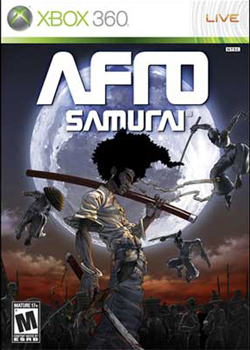
Afro Samurai (video game)

Platform: X-Box 360, Playstation 3
Developer: Namco Bandai Games
Genre: Action
ESRB Rating: M
Release Date: January 27th, 2009

If there's one thing the Afro Samurai anime films have in spades, it's style. Heaps and heaps of style. From the super slick animation right down to hip hop so infectious even someone opposed to the genre can get into it. It's what makes otherwise straightforward revenge stories sing, worth both your time and money. As such, there are expectations; if it carries the Afro Samurai name, it needs to carry that style with it if it hopes to succeed.

Thankfully, the game carries it's badge of cool proudly; and it elevates a game that's fun, but wouldn't be noteworthy without it.

Seriously, the gameplay isn't anything we haven't seen before. If you've ever played a God of War game, you've pretty much got the basics. Light and heavy attacks, blocking/parrying, combo's both available and unlockable. The focus is largely on dismemberment, however, with focus attacks that can take off limbs in one slice and an in battle minigame - body part poker - which focuses specifically on severing different limbs to get a decent hand. So as you'd expect, it doesn't deviate far.

The other elements of the game are the stars of the show. The cel shaded animation is smooth and without much flaw. It's not the exact look of the show, but it replicates the shows style with it's own flair, which works out well. Even better, however, is the soundtrack. While The RZA didn't directly oversee the soundtrack due to obligations, it's composed much in the same spirit, with many memorable tracks accompanying the limb slicing. I'm admittedly not a fan of hip hop and the music made an impression on me regardless, which I think speaks to the strength of the music. If you were to take tracks like "When the Smoke Clears" or "Can You Top This" and put them in the show, I think you'd be hard pressed to tell it didn't belong.

Thankfully, the storyline - pretty much an adaption of the first anime - has twists and turns in it that keep it fresh. The changes are welcome. As Ninja-Ninja says, you think you know how it ends because you've seen the show, but you really don't. To talk about some of them would be spoilerish; important considering some of the enjoyment is seeing what is different in the adaption. But the main crux of the story - boy watches his father die in a duel, boy grows up to take revenge - remains largely the same. It's just not always going to play out how you think, including how it ends.

The thing I can talk about is the thing that's probably changed the most in the story, the character of Ninja-Ninja. His general purpose is still the same - he's still a semi physical manifestation of the side of Afro that Afro has long since denied - but he has much more of an edge to him. Whereas the character in the anime is more of a friend and comic relief companion, the game version carries significantly more disdain for Afro and in some cases seems like he could care less about Afro's well being. He taunts Afro, is far more snide to Afro and basically shows little concern. In this way, the character becomes less a manifestation of the good that was in Afro and seems to become more like an imaginary reflection of Afro's own self loathing and pain that he buried deep beneath his desire for vengeance. I'm not sure if that's how it was intended, but that was how the change came off to me and I must admit I found it an interesting switch for this adaption.

The Score: Dramatic Thumbs Up

In all, the game runs the risk of falling into the general trap of basic video game adaption. It comes pretty close too. Thankfully, it's style makes up for the generally mediocre substance and the kinks in the general story make it worth a look. I don't think this is something you should rush out and grab, but if you find it on the cheap or feel like a breezy rental you can really do so much worse.

Thursday, April 22, 2010

Op/Ed: Casual vs Hardcore Gaming

It's somewhat funny, really. It really doesn't feel like it's all that long ago that the landscape of gaming was different. The talking points of "casual and hardcore gaming" barely existed. Then Nintendo pulled a fast one, put the Wii out and captured lightning in a bottle. Now everyone's scrambling to get a piece of the "casual gaming" market, despite the fact that there really isn't that much of a market at all. All the while, arguments over it seem to break out on message boards; people who are righteously frustrated clashing with people who don't accept that the current path leads down a darker road.

Make no mistake, there are a lot of apologists for casual gaming. Especially among Nintendo loyalists. Say word one bad about Nintendo's casual gaming focus and you're probably going to hear an expletive laden defense of the approach and how good it supposedly is for gaming and to shut up because it's successful so you clearly don't know what you're talking about. In a lot of ways, it's an outgrowth of the system wars that have been around as long as I have; as previously mentioned, a lot of the folks who defend it tend to be partial to a particular system that pretty much focuses on it.

A lot of these people really don't understand the problem with casual gaming or at least conveniently ignore the points against it. Really, the gaming industry has suffered a lot of dumbing down over the past decade. The Halo effect is probably the most notorious example; the game came out and was really a very mediocre effort, but it caught on like wildfire among console gamers because of the halfway decent online play, something PC gamers had enjoyed constant advancements on.

The effect isn't hard to see; progress in the FPS genre basically stopped as everyone moved back to the dumbed down formula Halo encapsulated trying to catch a piece of that wildfire. It's taken the better part of the decade for it to crawl out of it's slump. We're only just now starting to get back to where we were with FPS games ten years ago. It's way too apparent that something went horribly wrong thanks to Halo when you consider things introduced in First Person Shooters ten years ago are only now becoming standard, as though they were new, genius advances.

Does the basic framework sound familiar? It should. It's what's happening with casual gaming right now.

It's strange to see Sony and Microsoft scrambling so hard to whip up devices to catch that market. Sony was the undisputed champion of the last console generation with the workhorse Playstation 2 and it's constant stream of great entertainment. Microsoft themselves have rebounded this generation after the outright pitiful X-Box; sure, they have had a lot of technical failings that are deplorable for a consumer product, but the gaming offerings are much better this generation to the point where they're a contender. Now they're all racing to get a piece of that pie Nintendo grab; and make no mistake, it's a rather scary proposition, because there's the distinct chance of a backslide as far as games go.

The trouble starts when you realize that there really isn't much of a casual gaming market. When you look squarely at the Wii's success, it falls mostly upon the hardware itself. With the motion technology, Nintendo captured lightning in a bottle with the hardware; the freaking thing has sold ungodly amounts of units and made Nintendo richer than they've been in a long time. But the software is another story entirely.

Literally, games don't sell on the Wii. Most third party titles sell horribly to the point where most major third party publishers have pulled out of making almost any Wii exclusives at all. Anything M rated? Despite the past insistence by Nintendo loyalists that the system would do better if M rated games were on the system, it hasn't worked out that way. M rated games have come and gone, selling a pittance that probably didn't even make the developers their money back. Even former Wii exclusive No More Heroes is suddenly going multiplatform. If it's not a Nintendo product, it doesn't sell on the system and developers seem to have realized that. So the hardware sells a great deal, but it's software doesn't.

Basically, the Wii has turned out to be the next Tamagochi; a new shiny toy for the masses to buy and obsess over before they realize they've more or less been ripped off. And boy oh boy does America ever love it's shiny toys. Dangle something in front of them that makes them ooh and aah and you've pretty much got it made.

In effect, you can't really blame Nintendo for this. It's not like they didn't warn us this kind of thing was coming. Ever since the infamous SNES days when they were in the midst of the console wars, Sega being their primary competitor, they've lost their edge, in a sense. Over the years, they started mentioning that they didn't really want to compete anymore, but carve out their own niche. Between this and their admittedly anal attempts to curtail piracy even before it was an issue, they started to be perpetually one step behind their competitors and they were surprisingly a-okay with that. Their system offerings started going downhill, hitting a valley with the Gamecube. They were looking for what they got with the Wii; they wanted a system outside the major channels of gaming that would reap them loads of cash, because they didn't want to compete in the console wars anymore. Most of us stupidly thought this meant they wanted to blaze a path of innovation, but it's become all the more apparent that they just wanted the easy money. We all fell for it, hook, line and sinker with the Wii and we've probably got our own misguided perceptions about Nintendo to blame.

But hey, that's what they wanted; they've been spit shining their public image for as far back as the SNES days when they started censoring games so as not to ruin their family friendly image. In essence, Nintendo has always been the king of spoonfeeding consumers their branded line of bullshit and getting them to swallow it happily. Most of it's shadier dealings and practices in the past have been hidden behind their family friendly image which has typically managed to blind the consumer to what's going on behind the curtain. It's admittedly fantastic first party offerings and lovable mascots have certainly helped gain that general trust. Kind of reminds me of a certain company with a mouse as it's mascot, really.

It all comes back to Sony and Microsoft, really. They want a piece of that pie desperately. Sony's trying it's own motion controller to try and get this market. Why I'm not sure; I guess they want to be able to say they can do the same thing the Wii can while serving more hardcore gaming, but it's worrisome that they're trying it in the first place. Microsoft, meanwhile, is trying it's own shiny toy with Natal looking for that piece of the casual pie; the difference with them being that their shiny toy doesn't even work right, with the gadgets creators not even able to get it to work right. They seem to be missing that it's not the games that bring in the customers, but the gadget itself; they're not going to be selling whole systems with the gadgets, so they're not going to make the kind of money Nintendo did. But still they try.

In todays gaming age, things have already gotten tough. Less risks are being taken and more safe bets are flooding the market. Just ask Activision, who flooded the market last year with six or seven products from their "Hero" line, most of them abysmal but still selling. Or look at the number of similar First Person Shooters saturating the market to the breaking point. While we have franchises that deliver and games still moving forward, things feel like they're starting to stagnate. The "me too" nature of upcoming casual additions to the system looks to make that only worse. It's scary, in a way; the console makers are starting to lose sight of the things that matter in favor of chasing that dollar sign, which almost never leads to good things in any medium. The chase for that casual dollar is even starting to bleed into the games themselves, considering the changes wrought with Final Fantasy XIII.

Are we headed in the direction of stagnation, like PC shooters hit so long ago? Are we headed towards a direction that slowly bleeds the good qualities of gaming? Is the casual gaming focus stifling things? Who knows, really. Everyone's got an opinion. In mine, we may soon be in trouble; when and if that time comes, we can probably point to casual gaming as the reason.

I sincerely hope I'm wrong. But really, most of us are sheep. Easily herded once the right things have been dangled. The scary part? I think they're starting to realize it.