Friday, December 24, 2010

Final Crisis Aftermath: Dance (comics)

Writer: Joe Casey
Artists: ChrisCross, Eduardo Pansica
Collects: Final Crisis Aftermath: Dance #1-6

Of the four aftermath miniseries, this was actually the one I gave a damn about prior to release. The other ones sounded okay, but Grant Morrison characters? Actually being used? That had my attention; if this was Marvel they would have faded to the background for years or have been retconned out with the majority of Morrisons work*.

The Super Young Team really are something else. Pop culture superhero wannabe's one and all, the group is like an amplified form of Booster Gold from his glory hog days. Always seeking fame, fortune and fabulousness, they're far from typical superheroes, initially doing it for more self absorbed reasons. Even their costumes are different, acting like a manner of cosplay gone horribly wrong, mostly mashing together ideas born of the American superheroes of DC.

Picking up from Final Crisis, the team seems to want to take superheroics seriously. Unfortunately for them, their fame is becoming something of a nuisance. Their publicist has them pushed from one flashy media event to another, often keeping them from the opportunity for real heroics, and there's literally no news whatsoever about the state of Japan after the crisis. They obviously need to find out what's going on, but make no mistake, they want to be fabulous while they do it.

Joe Casey does some interesting things here. One part I liked was how he relayed Most Excellent Superbats thoughts through a twitter feed. It makes a lot of sense, really; these heroes are on top of all trends and immersed in pop culture. That and the young tend to fancy themselves invincible and don't put too much thought into their actions online.

The writer also has the story staged as an opportunity for the team to prove themselves, in a way. We often see throughout the story that, despite their celebrity status, the Super Young Team aren't exactly taken seriously, even by their supposed fans. An older Japanese hero berates them, calling them a shame of their hero community, some partygoers more or less call them a bunch of nobodies. The Super Young Team actually want to be heroes now, but they're at a point where no one takes them seriously. It's a pretty good underdog setup mixed in with a bit of generational conflict.

Also of note is how the miniseries is structured. Casey decides to take a different route, making about half the mini almost like standalone adventures. Sure, there's the overarching plot that runs through the whole thing, but each of the first several issues introduces a new conflict, setting and villain to be taken care of by the end of it. The last two more or less wrap up the bigger plotlines that had been simmering in the background.

It's an interesting direction to take a mini. Comics have been slowly moving away from strictly "writing for the trade" - we've recently seen the return of three to four issue arcs instead of six all the time - but mini's, especially six issue ones, traditionally tell one overall story. Run did this - to stick with an example within the same grouping of minis - and while the titles of the issues tried to give the impression of two issue arcs within the six issues, Escape was really just one long confusing mess. I appreciated it's structure and wouldn't mind seeing more of it.

So storywise, the book does rather well. It's the art that's a problem. Chriscross seems to flitter from decent, workable art to odd stuff that doesn't quite feel right. I'm not a fan. But that would be tolerable if he did the whole thing; a story can save a book from lackluster art. Sadly, he had a fill-in artist.

Unlike Escape, the art just doesn't pull together. There, the three issue pencilers managed to settle on a relatively consistent style among them, to the point where if you weren't really looking, you might not notice too much difference between them at first glance. Dance doesn't fare as well. Chriscross and Pansicas work look nothing alike, making for jarring shifts in the midst of the mini. I didn't like what I was seeing to begin with, then they decide they're going to throw in another artist who doesn't fare a lot better.

The story manages to pull through, but the art hurdles actively work against it. I'm generally more forgiving if the work is particularly good, but I genuinely did not feel like what I was looking at was either artists best. I really didn't care for what I saw. Perhaps deadline troubles brought this about? Either way it's a problem.

The Score: 6.5 out of 10

I'm genuinely intrigued by the Super Young Team and I wouldn't mind seeing more. Only next time, I'd prefer it if the art held up it's end of the bargain. What's here is a decent story, but the art really does bring it down. It might be worth a look if, like me, you want to see more of Super Young Team. I can't really recommend it with art troubles like this, however.

* Why yes, I am bitter about New X-Men. Why do you ask?

Tuesday, December 14, 2010

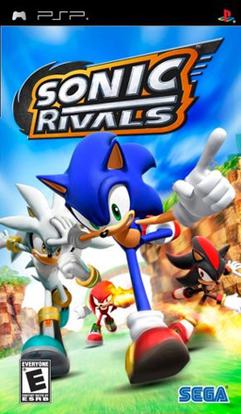
Sonic Rivals (video game)

Platform: PSP
Developers: Backbone Entertainment
Genre: Racing
ESRB Rating: E
Release Date: November 24th, 2006

No kidding? Sonic has a game on the PSP? Who woulda thunk it? Anyone with a firing synapse, actually. It's not like Sonic has missed a console since Sega went third party. So here we are with his first PSP outing. Is it any good?

First off, I'm actually kind of surprised it took so long for Sega to put out a game like this. Rivals is less "action platformer" and more a racing game with platforming elements. It echoes some of the familiar bits of gameplay from the 2D classics filtered through a race to the finish line. Seems like a no brainer, dunnit? I mean, hell, Sega had done the concept before with multiplayer of the classic Sonics, making it surprising they hadn't tried a full game of it before.

So, you know, Eggman's up to his dirty tricks again. Apparently he went out and bought himself a spiffy new camera at Best Buy or whatever store he hasn't been thrown out of yet. Naturally the first thing he's going to do is piss off his nemesis with it. Only, gasp, this camera turns whatever it takes a picture of into a little card, including Amy and Tails. Now, Sonic doesn't think this is really the way his friends should be treated, so it's time to go beat up fat people again. But then, a twist; now a bunch of Sonic wannabe's plus Knuckles are after him too, so naturally the way to settle this is by racing.

The term "team-up" is apparently lost on all of them.

The story's alright for what it is. It's really just an excuse to get four characters to race one another. It kind of makes everyone look pretty dumb though. I mean, they're all after a fat dude with a hilarious mustache. A couple of them are friends or at least on decent terms. Shouldn't they be helping each other, or at least not getting in each others way? Shouldn't they at least try to have a conversation before deciding "ha ha, I'm totally faster than you, I'll catch him first"? Apparently this doesn't occur to them until the rotund doctor decides he's going to turn the planet into a card.

I guess in Sonics world, love interests, best friends and huge gems being turned into trading cards isn't reason enough to work together. Nope, racing is clearly the superior option. It's all fun and games until somebody turns the planet into a card. If you ask me their priorities are a little screwed up.

Music and sound fare alright. None of it's really spectacular, but the actual stage music is pretty nice. There are also some sound clips, but they're not a big deal; it's a shock to get a voice clip with more than one word. At the very least, Tails is a card for most of the game, so I don't have to worry about wanting to strangle him as previously. The graphics are decent, but ultimately far from noteworthy.

The gameplay's technically sound, but while the basics work out, the other stuff does it's best to sink it. For one thing, this games a rubber band racer. No matter what you do, no matter how well you play, that sum bitch is going to catch up to you and kick you in the shins. Whoever is in second place suddenly becomes faster than the guy in first, so even if you play perfectly chances are good he's going to catch up.

There are power-ups to help keep them from passing you, but they don't always help. I really hate this kind of crap because it just takes skill out of the equation. When this sort of thing is done, it's usually done under the guise of keeping the challenge up or the game fair, but it's an artificial fix that actually makes things worse. I hate it when racing games do it, so you can imagine how much I cared for it here.

The level design this go around is pretty respectable. They usually have three different paths to go by - top, middle and lowest - similar to the classics, only streamlined for racing. This only succeeds in making them less interesting, but for racing tracks, they're not horrible. A bonus is that bottomless pits are less of a hassle here; the only real penalty for falling in one is losing a couple seconds while you respawn, a far cry from the pain they usually are.

Here's where the trouble really starts. You've got four playable characters - including Silver, a character whom Sonic '06 was in the process of ensuring we probably won't see again - each with their own story. But aside from a signature power-up-triggered move, that's the only thing different about them. They all play exactly the same, with no strengths or weaknesses among them. It's a problem the franchise had for a while, in that the developers never seemed to understand that having multiple playable characters meant nothing if they played exactly the same.

Compounding the problem is that the levels are exactly the same for each of them, with no variations whatsoever. If you want to play through all four storylines, you essentially have to play through the game four times, through the exact same levels in the exact same order. Since the levels aren't interesting enough to be worth replaying much, this means you're going to get bored around when you finish your second run through with another character.

There isn't the now-traditional last story in this game either, which means the only incentive for completing all four is to play as Metal Sonic. He doesn't even have his own story, so it's not really much of a prize. The game tries to add replay value through collectible cards, but it doesn't quite get the job done, since the game itself gives little reason to want to play more to get them all. There are challenge modes for each stage as well, but it's difficult enough just to force your way through the six levels four times for each story, so it's not exactly an attractive option. Add in an utterly worthless Grand Prix mode - to unlock a cup, you literally have to complete every single challenge for a level - and you have a game that tries to add replay value but utterly fails.

The game is enjoyable for a bit though. The first playthrough is at least mildly entertaining. I get the feeling this game would have been more enjoyable if it were a more traditional Sonic platformer, however. The sixth and final level, you race against time instead of a "rival", so it feels more like a regular Sonic stage. The time limit is relatively strict, but still, it feels different and a bit more enjoyable. What could have been.

The Score: 6 out of 10

In all, there's about an afternoons worth of fun here, but that's about it. You're really best served just playing it for Sonic story and then putting it down, because you'll have seen most of the game. It may be worth a rental. I just wouldn't recommend buying it unless you found it for dirt cheap.

Friday, December 10, 2010

Final Crisis Aftermath: Run (comics)

Writer: Matthew Sturges
Artist: Freddie Williams II
Collects: Final Crisis Aftermath: Run #1-6

In the midst of Final Crisis, the Human Flame got his "revenge" on his nemesis. But the Crisis ended and it turns out that having one of the heroes murdered in cold blood is probably a bad plan. So the two-bit never-was decides it's time to go on the run from pretty much everyone and bumbles his way from one predicament to the next.

Now, it's not often that we get a bonafide villain centric comic; a lot of it being due to the problems said concept brings up. If we get anything of the sort, there's usually an anti-hero slant added to the character or it focuses on the positive qualities. See Secret Six for one example; most of its members are former villains who have since moved more towards shades of gray.

Not here. The Human Flame is a bonafide, Grade-A douchebag. Halfway through the first issue - about when he ties up his ex and steals her car right in front of his kid - it becomes crystal clear that there is absolutely nothing redeeming about him. He's nothing but a thug with delusions of grandeur. Not exactly someone you could write an ongoing about, but for a mini like this, he's just what the doctor ordered.

See, Run is very heavy on the dark comedy. Human Flame is a worthless loser, a fact the story never fails show in a variety of ways. So we watch as he screws himself over time and time again, usually with bloody results. No matter what he does or what he gains, his tendency to be a scumbag causes him to blow it. He's his own worst enemy and it's fun to watch him fail repeatedly at villainy.

The comedy Sturges shoots for isn't just dark, its quite physical. Run almost verges on Looney Tunes-ian in regards to the slapstick. Things the Human Flame uses blow up, money burns, he runs out a three story window and smacks the pavement and so on. It's depraved, physical comedy enacted on the type of human being whom - though you would never admit it - you would want to see get his just desserts if you met him in real life.

It's easier to laugh at these sort of things when your protagonist is such a prick, which is why Sturges made the right call here. Doing it with a more heroic figure - or even an anti-hero - doesn't quite work. After all, if you like the character, do you really want to see one of Flashes rogues knock his teeth out? Not to mention that the Human Flame is about as Z list as you get in regards to villains - as are a bunch of other loser villains he hooks up with in the story - so you can do whatever you want to him. I doubt this could have worked with any other character; even some C list villains have some manner of potential or popularity that can keep a writer from going all out. Sturges doesn't have to worry about such things and he makes the most of it.

I can't mention the successes of this book without mentioning the art. Freddie Williams II really outdid himself here. When I mentioned earlier that the book becomes almost Looney Tunes-esque in it's slapstick, a good bit of that is because of his art. He shows almost everything that happens to the Human Flame. He doesn't seem to skip on the detail anywhere, even a particularly gruesome two pages where Human Flame wakes up in the midst of his "upgrade". I can't say enough good things about the art; without this level of work I doubt it would have worked as it does.

All the elements combine to make a fun read, though I imagine it's not for everyone. If you need a likable protagonist to care about the proceedings or aren't partial to dark humor, this one might fall flat for you. Otherwise this is a well constructed tale that feels like it winds down about where it should. I'm not sure we'll ever see a book starring the Human Flame again - I'm almost shocked they did this one, since it's literally a mini about a nobody villain - but if Sturges ever wants to write this sort of thing some more I'd be glad to pick it up. Something like this every once in a while might be nice.

The Score: 8 out of 10

This isn't a book that's going to rock your world. It's not a book that really "matters", at least not to the greater continuity. It's probably not going to win any "best of" awards either. But that's not a good way to judge it. If you like fun, dark comedy then you could do so much worse than this. I had a good time; to me, that counts quite a bit.

Tuesday, December 7, 2010

Final Crisis Aftermath: Escape (comics)

Writer: Ivan Brandon
Artists: Marco Rudy, Cliff Richards
Collects: Final Crisis Aftermath: Escape #1-6

As they usually do with events, DC decided to push out a few "aftermath" mini's in the wake of Final Crisis. Four of them, this go around. A funny thing I noticed in discussions is that the four tend to split people right down the middle. The average seems to be that everyone has two they loved and two they hated, with no one mini being universally hated.

Well, I can tell you this; Escape is not going to be one of my two.

So Tom Tresser, otherwise known as Nemesis, is drugged and abducted from his home. He wakes up in an unfamiliar place where the very laws of reality seem to have no hold. He has only one plan. To escape.

This is a tough review to do. Part of that has to do with being unsure that I really have anything to say that Iceberg Lounge and Collected Editions didn't say already; obviously, opinions are going to overlap from time to time, but I find myself skittish about reviewing something if I don't feel like I've got anything new to say. But another large part of the problem is that part of me just doesn't even want to think on it. This book is kind of like the kid who's a perpetual screw-up, but tries hard enough that you can't hate him even if you don't want to be around him because he's so freaking odd.

This is a hell of a difficult read. There's a very real feeling when reading this that what you're witnessing is just chaos birthed onto the comic page. But the difference between the good kind of difficult read and the bad is what lies in between the lines. The best kind are those that aren't linear, but at least have something under the hood. With similarly unconventionally told stories, there are meanings to everything and nothing is by accident. But this story feels the exact opposite.

The trouble is that the story doesn't seem to have a real plan in mind. Some writers have proven that the general framework of storytelling is very flexible as long as you get your point across and give everything the reader needs to figure it all out. Escape is way off on the other end of the spectrum, seeming to hold its cards too close to the chest and choosing to be complex for the sake of complexity. It's like a maze with no real path to the exit, the only way to get there being if you teleported to it.

The end result is one of the most unfortunate attempts at an nontraditional narrative I think I've read in a long while. Which is sad, as not everyone in the business really chooses to experiment. What makes the whole thing even more disappointing is that there were points in the book - like, say, when you realize what's caused the "jumps" from one scene to the next - where it seems like things are headed somewhere and that there's a solid foundation beneath, but eventually that feeling gives way. If there was a plan or point to all this, the writer tried so hard to make Escape a different kind of read that he completely obscured it from view.

Luckily, there is a positive quality or two to speak of. The cast of the book is good. Pretty much all of DC's spy characters and organizations are present, from Suicide Squad members to Checkmate on down the line. I loved Greg Ruckas Checkmate series, so even just seeing some of the characters again is nice. There's also a fair bit of fun continuity mining; though I'm not sure just what the hell the Kirby stuff had to do with anything aside from the fact that Final Crisis used it too. There's also some fun "meta" moments, as when it's pointed out that Nemesis has been nothing but a supporting player in someone elses stories while over the course of this story becomes something more; I'm pretty sure that's a clear jab at the then recently ended relationship he had with Wonder Woman that made him a regular presence in her book.

It's also worth mentioning that this volume at least attempts to follow the precedent set by its associated event. It's an unfortunate fact that aftermath stories tied to events don't always have a lot to do with what the associated event was trying to accomplish. Grant Morrison is known for being unconventional in his writing, which I've felt is a large part of why he's popular and why he also has detractors. This mini seems to try to follow his lead; I appreciate that the effort was made, even if it didn't work out.

The art's not so bad. It's held up by Marco Rudy, Cliff Richards and Neil Edwards, the last of whom would go on to do some of Johnathan Hickmans Fantastic Four issues. Despite the number of artists, they do a respectable job of mimicking one another, making it tougher to notice when there's an artist change without looking at the credits. There's the occasional exception - sometimes you may notice a face doesn't look exactly the same as previously, but for the most part it's seamless. If you're going to have more than one artist on a miniseries - which, mind you, I'd prefer not to happen - this is generally how it should be done.

The Score: 5 out of 10

It's unfortunate, but this mini feels like a spectacular failure. There's complex and then there's confusing; and this book is definitely the latter. Skip it. It's not worth the trouble.

Friday, December 3, 2010

Metro 2033 (video game)

Platform: X-Box 360, PC
Developers: 4A Games
Genre: Survival Horror, First Person Shooter
ESRB Rating: Mature
Release Date: March 16th, 2010

Post-apocalyptic futures aren't exactly the norm for video games, or at least they weren't for the longest time. Sure, the Fallout games have delivered it, but they don't exactly play it straight; dark humor is the order of the day in those games and the outlandish isn't out of place there. So here comes Metro 2033 - based off a Russian novel - to help fill the void.

After nuclear war ravaged the world, survivors in Moscow retreated to the metro tunnels beneath the city. Unable to live on the surface, they made a life for themselves there, with different stations all through the metro becoming like underground cities, interacting with one another through the many tunnels. But the nuclear war had other effects. Monsters now roam the tunnels, threatening the stations. Your own station, Exhibition is besieged by a new threat, the Dark Ones. When encountered, those who survive the encounter are left broken, their minds scarred. Your station now on the brink of annihilation, it falls to you to traverse the tunnels - and occasionally the irradiated city topside - to get to Polis station for help. It won't be easy.

Despite the presence of monsters, anomalies and ghosts, the game feels relatively realistic. Part of it has to do with game mechanics, but another part of it is that it feels like what you might expect to happen after a nuke or two was dropped nearby. The metro tunnels are the only habitable places - at least for a good long while - and they still carry danger, while even a short jaunt up to the surface world is always an ordeal. Even the currency speaks to the dangerous world your character inhabits; pre-war military grade ammo serves as money to the denizens of the metro and while you can fire it, firing money is probably not the greatest plan ever devised. It feels like a world that's been sent to hell, with what survived struggling to etch out a living in the fiery flames.

That it feels this way is important, because it adds a lot to the experience. The game shoots for an immersive package and on the whole it manages to achieve its goal. Things like checking your objectives, for example. Instead of an objectives screen, you bring out your personal journal - while the gameplay is still going, I might add - to check them. Need more light to read it? Good thing you've got your trusty lighter. Going into irradiated areas - or going up to the surface, where the air is toxic - requires a gas mask, which is as important as a gun in this world; almost everyone, especially people outside the stations, has one on hand. HUD icons aren't even necessary here. Need to check your filters or how hidden you are? Simple as pushing a button to bring up your watch. Want to know where to go? Good thing your journal has a handy compass. You don't need to pause the game to do much of anything; almost everything is done in-game.

In what seems like the pink elephant of game design these days, the developers decided to make this game level based. You're continuously moving forward on your path to save your home station, overcoming hurdles as you run across them. There are towns along the way - almost always a converted metro station - but each is akin to a breather along the way, allowing you to exchange your ammo for weapon upgrades and other tools you may need to survive. While the structure may be a bit more traditional, you don't have to worry about play time. This is still a relatively beefy game, containing seven chapters and a prologue, with the majority of them having five to seven levels including "towns". I thought it was a good design choice, if only because it keeps the story moving and that most major console games seem to shoot for a sandbox style of play these days.

Some of what I liked best about the game are the little things. The gas masks in particular require that you find filters, allowing you to stay topside longer. When a filter gets low, your mask is fogged up before a fresh filter is placed. The gas mask can also take damage; and if broken while in toxic areas, you have twenty seconds to find a replacement or you're screwed. There's also a charger in the game, used for charging your batteries. Both the night vision goggles and the flashlight use the batteries, so when power is low, you need to pull out the charger to boost it back up. The more you charge, the brighter your flashlight becomes. Your enemies are also as vulnerable to the environment as you are; if you're outside and you knock their mask off their head with a well placed shot, they too will eventually die from the toxic air. When you escort a child by carrying him on your shoulders, the aiming speed and such change to simulate the extra difficulty. Touches like that are just cool.

Levels are mixed up just enough to keep things from feeling stale. With levels involving human targets, you can opt for the stealth route rather than Rambo tactics. With some of them, it's probably a really good idea; not just to save ammo, but also because eight or nine Nazi's sending a hail of lead your way is a pretty reliable way to die. How the hell Nazi's were in Moscow when the bombs hit is anyones guess, really, but the pricks tend to hit you in groups. Some levels are even of the "rail shooter" variety; you'll typically be riding shotgun on a handcart, trying to keep monsters from overwhelming the cart.

On the whole, there isn't a lot wrong with the game. The controls are of the standard variety layout for First Person Shooters, but they're responsive and feel tight. I saw few to no glitches, which is a very welcome thing in an era where games are dumped to shelves with numerous bugs. Really, it's just a great game; one that proves that making a great, lengthy game can be done with the old fashioned method of "levels". Seems like a foreign concept these days, doesn't it?

The Score: 8.5 out of 10

This is probably my surprise of the year in gaming. It's great from top to bottom and is well worth your money. I definitely recommend it.

Sunday, November 28, 2010

Thor (comics)

Writer: J. Michael Straczynski
Artist: Olivier Coipel
Collects: Thor #1-6

I've gotta say, mythology in comics usually doesn't do it for me. It's part of the reason you don't see many comics reviewed here that dabble in it; it's not the reason I haven't touched Hercules yet, - I actually like Greek mythology a lot - but it is part of why I haven't bothered with Marvels Thor. Something about it when translated into a comic medium just seemed off to me, so I've long avoided many comics that deal with it.

However, sometimes a comic will get so much praise that I end up ignoring my personal preferences and give something a shot I might not otherwise. Thor by JMS is one of those times. JMS is a rather controversial writer - especially since he went to DC - but his Thor run garnered acclaim and I'd wanted to give Thor a fair shot, so the first trade of his latest ongoing seemed as good a place as any.

The story starts from the ground up. Ragnarok has come and gone; the cycle finally broken by Thor himself. After his victory, he went missing; left to sleep in an endless void. But now, he has returned. The cycle of Ragnarok behind them, he brings Asgard back, settling it in Oklahoma. Now he must find the rest of the Asgardians hidden away in humans scattered all over. But the world has changed in his absence and it may not be ready for the gods to live among them.

These days, new ongoings have a habit of being inpenetrable just as often as they make themselves accessible to newbies. There's been several occasions where a new number one continues a story from someplace else, which really defeats the purpose of a number one issue. If you're not getting in on the ground floor and learning everything you need, then what's the point? The new Thor series doesn't have this problem, thankfully. I'm pretty ignorant when it comes to Thor and his mythos at Marvel, but by the end of the first issue, I felt like I knew what I needed to. This is pretty important to me; as cynical as comic readers generally are with their "oh there's no such thing as a new reader" business, there are people who would like to read new things or read comics. But comics have a reputation for being impenetrable for newbies, one it's probably earned; I've heard some say "you know, I wish comics weren't so hard to get into so I could read some [insert chracter here]", which leads me to think there really ought to be more effort into making them easy to get into. As a newbie to Thor, I appreciated feeling as though I had been brought up to speed despite not knowing a lick of the lore prior. Comics need more of this sort of thing.

This volume's starts off slow, but each issue seems to ratchet the momentum up a bit. First, Thor is back, then in the second issue Asgard returns, in the third Thor finds his first hidden Asgardian and so on. It feels like you're along for the ride as the Thor mythos are rebuilt from the ground up and for a reader new to Thor, that's a rewarding feeling.

Most of the book is well written. There are some particularly nice moments as we watch the Asgardians interact with their neighbors in the town near Asgard. Actually, the residents of the nearby town are probably what surprised me the most; I wasn't quite expecting to like them as much as I did, but lo and behold, I did. They also bring about some genuinely funny moments in their interactions with the Asgardians, which is welcome.

Unfortunately, it's not all roses. If there was a rough issue out of the six collected here, it was definitely the third one. In it, Iron Man guest stars as Thor finds himself in a Hurricane Katrina ravaged New Orleans. Just by that previous sentence you can probably see where it went wrong. JMS has brought in real world events before - see the 9/11 issue of Amazing Spider-Man he did - and it's exactly the sort of thing I hate in comics. Not only did this come years after the disaster in question had come and gone, JMS used it to get a bit preachy. One of the citizens is pissed at Thor because he didn't do anything - despite the fact that, you know, the dude was dead when it happened - and irrationally blames the heroes despite Thor explaining that there was no way he could help. Then Thor feels bad because he could have stopped it. Only, you know, he couldn't, because this is a real world disaster we're talking about here; if Hurricane Katrina never happened this issue wouldn't have existed, which makes this whole exercise feel pointless and stupid. At least Thor didn't respond by taking a walk around America.

Worse still is the appearance by Iron Man, as this book takes place back during the time Iron Man was the Director of SHIELD. After Civil War manhandled the character, it became hip to have Iron Man show up in a book so that the title character could tear him apart. Not only is this annoying for fans of the character who already didn't care for how Civil War twisted him, but it happened so often that it quickly became tedious. Even if, by chance, you DID want to see it happen, it's kind of hard to pump your fist and say "yeah, give that mustachioed prick what he deserves" after the twentieth time a book had their main character tear open the armor like a can opener and beat the stuffing out of him.

Still, it's not enough to drag down the trade as a whole; the fourth issue gets a little preachy, but it's otherwise not as bad as I'd feared.

Oliver Coipel's work here also cannot be understated. He draws Thors head a bit blockier than I'd expect, but he otherwise draws the hell out of this book. He seems right at home with the granduer of the material, drawing splash page after gorgeous splash page of the mammoth floating Asgard. His fight scenes are also rather striking. I was pretty impressed. I hope JMS gives him even more to work with in future volumes.

The Score: 8 out of 10

In all, I enjoyed this book. I'm not sure I can call myself a Thor fan just yet, but this book went a pretty long way in making me a convert. It's a bit of a slow start, but it's accessible to a newbie and if things keep up in the next volume I'm hoping things will pick up even further. Still, what's here is pretty compelling and I'm intrigued enough to come back for more. Recommended.

Saturday, November 27, 2010

Secret Invasion (comics)

Writer: Brian Michael Bendis
Artist: Lenil Yu
Collects: Secret Invasion #1-8

Well now, that was certainly a waste of time.

Marvel doesn't exactly have a great track record with events in the 2000's. Most of them sucked. Harsh, maybe, but it's true. Some did have redeeming qualities, but I can't think of one that was genuinely good.

I thought this would be the one to break the trend. It had a good setup - hell, if we're being honest the entirety of New Avengers up to that point had been leading to it - a decent hook and it had readers completely engaged. People were scrambling about, searching past Bendis comics for hints or clues; that's pretty much when you know you've got everyones attention and interest. It should have worked.

Should have.

Bendis and Marvel promised that you could read just the main miniseries and get a complete story, so I put that to the test. Well, the claim certainly holds up, mostly because there's nothing here. Skrulls invade and the heroes fight back. That's it. This comic is one giant brawl between heroes and aliens. A brawl that someone decided it should take eight issues to tell. Even on a payoff level it doesn't deliver.

At one point, the entire event was going to be split between Mighty and New Avengers, showing characters abductions and replacements by Skrull agents in the past while the battle raged in the present. Think what DC did with Sinestro Corps War. But eventually they went with a standalone miniseries, with all the abductions relegated to the tie-ins. The reason boils down to money, but it damaged the integrity of the event; eight issues of fighting could have been eight issues of deftly plotted invasions, reveals, answers as to when people were abducted and all the trimmings. Instead, we get filler.

Now lets be real here; the question of who was a Skrull and who wasn't comes out to about ninety percent of the buildup to Secret Invasion, including the ad campaigns. With all the explanations held elsewhere, the most interesting part of the story is gone. It's like they stripped the meat off a bone and then handed it to us. As a result, we get eight issues of fighting in the Savage Land and New York City. Eight issues of fighting that had the entire line tying into it for upwards of ten months.

Worse still, after all that buildup, the Skrull reveals aren't even all that interesting. There are maybe four major reveals and they all happen in the first issue. Half of them aren't even superheroes. There was a very real fear going around at the time that the event was going to be used as a cop-out for the actions of certain characters over the past couple of years. Turns out Secret Invasion didn't pull any of that at all - Bendis pokes fun at it with a few fake-outs - but the flipside is that we went through months of characters braying about how they couldn't trust anyone - to the point where fans were saying "enough already, lets get to the invasion" - only to have almost all of the heroes be the real deal. All that hysteria over nothing. Moderation is good - and if the story went too far in the opposite direction I would have been pissed about that - but it felt like the infiltration didn't have the impact that it needed.

Secret Invasion is also packed with filler. Lots of it. Seriously, there are sequences where it's so obvious wheels are being spun because "holy crap I have to fill eight issues". This is at its most noticeable when characters seem to flit in and out of the story at random, ultimately doing nothing of consequence. One of the most ridiculous involves Marvel Boy. We see him from time to time in the course of the story before he's inspired to join the battle. He then makes his presence known on the battlefield, telling the Skrulls that the battle is over and they've lost. We don't even see him again after that aside from him being present in a crowd scene. He just vanishes from the story. That's just one example; they're all over this book.

There's also an occasion where a scene just straight up does not make sense. The climax of the book involves some last resort doomsday weapon the Skrulls had. What it is or how it's actually resolved, I really don't know. Bendis doesn't tell us anything about it, much less how it's resolved. It looks like a tornado hits the character in question and they dissolve on impact. Whatever it was, it happens and then the story goes on its way with no explanation in sight.

I'm not even going to touch the ending, because it's simply insane and makes no sense whatsoever; I realize Marvel - and Bendis - wanted a certain status quo, but what they went for is more like trying to shove the meat clever in a slot made for the steak knife.

It's written, well, like a Bendis comic. Which is to say that it's at times overly quippy. Better people than I have pointed out Bendis' flaws as a scripter - there are times where everyone sounds the same, it's all too fixated on cool lines and so on - but the man can write a good comic. I've read some of them. This isn't one. Most of his bad habits as a writer are on display here.

Lenil Yu does the art; I can't say I'm a fan, but I don't dislike his work either. He does well enough - and packs detail into the fights - but there are times when his art is too scratchy for my liking. I guess it comes down to my personal preference. Others seem to get more mileage out of it than I did.

At any rate, this story is deeply, deeply flawed. There is so much wrong with it that I simply cannot recommend it. Bendis had a good thing going here, but whether it's the format getting in the way or otherwise, it just didn't work. Damn shame too; part of me thinks it should have worked. I hate it when potential is wasted.

My Opinion: Skip It