Saturday, August 22, 2009

Amazing Spider-Man: Brand New Day vol. 2 (comics)

Writers: Bob Gale, Zeb Wells
Artists: Phil Jimenez, Chris Bachalo, Barry Kitson
Trade Collects: Amazing Spider-Man #552-558

With the first volume of the opening of Spider-Man's new era, Brand New Day, behind us it's time to move on to volume two. After a very solid first volume - which collected the opening arcs of Dan Slott and Marc Guggenhiem - the final two writers of the initial Spider-Man "Brain Trust" step up to deliver their opening stories. Is this volume as solid as the first?

No, not really; in truth it feels a bit uneven. After reading this volume, I found it really brought attention to the rotating writers we have in the current era of Spider-Man in ways both good and bad. But we'll get into that soon enough.

The first arc collected this volume is the first of Bob Gale, whom was one of the original members of the Spider-Man "Brain Trust". It details Spider-Man through his troubles with the DB, now owned and operated by the sleazy Daxter Bennet, and the appearance of a new enemy named Freak, whom we met in the short backup centered around Aunt May last volume. The second arc is the first of Zeb Wells; a blizzard has hit New York City in the middle of April, caused by means we come to find out are quite unnatural. Spider-Man must weather the storm and try to figure out what is causing it. The last issue collected is written by Bob Gale and ties up the Freak storyline for the most part, as Gales arc left it open somewhat. Also returning in the issue is new villain Menace whom was introduced last volume.

Bob Gales arc centered around new villain "Freak" is something of a mixed bag. Unlike the first storylines of Brand New Day - which set Peter back to basics in a way that felt modern without being derivative - Bob Gale's style of writing feels way too old fashioned. Thought balloons are over abundant here, we have Peter over-talking or over-thinking what was happening all and then we have an over-reliance on old fashioned page transitions. Even the dialogue feels too old fashioned to be taken seriously in this day and age. One of the things people whined about in regards to the change of status quo was that Spider-Man was going back to the seventies and eighties; here comes an arc that feels like something right from that era and it's really the last thing the fledgling direction needed at this point.

On top of that, out of the three new villains introduced thus far Freak is by far the least interesting. Mister Negative worked well and Menace is alright for a character that looks far too gobliny for my taste. Freak, on the other hand, is the loser out of the crop so far. For the most part, he boils down to a drug addict who stabs himself with stem cells when he mistakes them for drugs; the end result is that he turns into a monster that, whenever killed in some fashion, cocoons itself and mutates into a form even stronger than before that is also resistant to the previous method of death. The concept is solid enough, but Gale never manages to sell it; Freak's dialogue is almost laughably bad sometimes and you find yourself unable to care about this new rogue.

The artist for this arc is Phil Jimenez. I have to say I don't think his work was quite as strong here as in the past. Sometimes the faces look a little off and the art feels a bit more rushed than what we normally get from him. Considering the weekly format and the grind it must put on the artists, it's not terribly surprising, but it is disappointing.

Zeb Wells arc is much, much better. We're thrust back into more modern storytelling. No more over-exposition; Wells seems to know when to let the artist carry the story. The arc starts out with a guest star appearance by Wolverine and Doctor Strange before Logan departs and Spidey is left to figure out the cause of the blizzard. The story feels a bit more claustrophobic than previous arcs, which works to it's advantage; with the story feeling more closed in, the blizzard really creates a feeling of isolation in the Big Apple and helps with the sense of urgency the overall threat later places on things.

The artist for this one is Chris Bachalo, whom is imminently capable in his own right. The artwork for this arc is simpler, with less lines and a bit less detail, but it really gels with the overall story. Aside from the heroes, the colors are less pronounced in this tale, with their backdrop being scads of white and some snowflakes in the foreground. It's beautiful in it's own way. The only nitpick I had with the art is that I though Bachalo drew Wolverine overly beefy; Wolverine's a muscular guy, for sure, but he was a bit too hulking in this one.

The last collected issue is again written by Gale, but thankfully the writing felt a bit more restrained in this one and less like a lost 1970's Spider-Man arc, though it still suffered from some of the same writing pitfalls of the earlier arc. For the most part, the Freak storyline is more or less wrapped up for the time being in a semi-conclusive way; in other words if no one wants to use him again it's really not necessary by the end. Menace also makes an appearance as the Mayoral election plot moves forward a little bit. All in all it's not a terrible issue and it feels like a better installment than the arc it wraps up.

Barry Kitson pulls art duties on said last issue. His work is much cleaner and feels more modern to me in this issue and I thought it was pretty good. It doesn't stand out much either way though; it feels like some dependably solid Spider-Man art that I don't have much in the way of complaints about.

As I mentioned earlier, these arcs really brought about the good and the bad in regards to the rotating creative teams. Thankfully, there's more good than bad; one bit that's much appreciated are the different artists, which gives each arc it's own look and helps each volume feel a bit like a showcase in different arts, even if the effect is unintended. The other good part is that when they remain relatively consistent, each arc will flow together well and still feel like the same Spider-Man. On top of that, we get a unique voice and addition with each arc that comes down the pipeline.

The bad, however, lurks right around the corner. All it takes is one writer to muck up the consistency and sadly that writer is Bob Gale. His wildly different style of writing things feels so overly retro that it becomes something of a stark contrast to the relatively consistent feel the other writers bring. In regards to the other writers, while each arc feels different, they still flow together and feel consistent. Gale doesn't write like that here and it really is to the detriment of the team.

Back to some positive. MJ is not missed, even in the lesser arc. Without the writers having to worry about forcing her in, we get scenes with the supporting cast. Really, the supporting cast helps make things so much better; losing it was really the stupidest mistake ever made in the history of the franchise. I'm glad this aspect of Spidey has returned; even in Gales opening arc they help quite a bit.

Also, I can't stress enough how great it is to have running subplots back. That's another thing that helps out even the lesser work in this new era. Things like checking up on Jonah Jameson, whom had a heart attack in the last volume and lost the Daily Bugle without his knowledge, or the slow burn of the mayoral election subplot are welcome insertions and help mix things up. They also help things feel consistent from arc to arc; the writers may change, but the suplots and issues carry over. The little touches that tease upcoming events or refer to past events in the book are great details as well; an odd, upcoming blizzard is telegraphed in the background of Gales arc almost throughout, which really helps lead into the aforementioned arc.

Things are still fun as well, even if this volume isn't quite as much so as the last. Despite the issues with Gale's writing, even his work feels a bit more "free" and loose. It's this feeling that really makes Spidey worth following again.

My Opinion: Try It

Saturday, August 15, 2009

Ramblings: Batman Arkham Asylum Demo Impressions

If you pay attention to video games at all, you're probably aware of the Batman: Arkham Asylum video game by now. Speaking as a complete freak for anything and everything Batman, I simply cannot state in words just how excited I am for this game. I mean, seriously; I can't think of the words to describe it. I even pre-ordered the goddamn collectors edition and I never bother with those.

So of course I snatched up the demo the very second it went from being a Live Gold only exclusive to available to everyone. By the way, just to say it now, I really think it's bullshit that Microsoft actually reserves some demo's for anticipated games to Live Gold only for about a week. It's a stupid tactic; absolutely no one is going to run out and nab a Gold subscription just to play a demo, so what's the point beyond being irritating? It's a practice that really needs to end; all it really does is hurt people. The online play, the Netflix streaming; that's one thing. The demo restrictions need to end.

Anyways, so I've finally played the demo to one of my two most anticipated games of the year - the other being the completely metal Brutal Legend - and I figured I'd give my thoughts on it and general impressions of the game so far. Keep in mind that this is not a review or anything. As such, I may have a tendency to ramble or swear; this isn't a professional style review, just a smattering of thoughts on a game I'm hotly anticipating the release of.

Anyways, the first thing I could say is that having completed the demo, I'm actually rather pleased with what they gave you for it. The length of the demo itself isn't spectacular or anything - there are certainly those that last longer on X-Box Live - but what is given completes the general criterion any demo should strive for; give the gamer enough to whet their appetite and entice them to come back for more. The demo starts at the beginning and runs to right before a first encounter with some deformed hulking creature. On top of that you have access to some nice character bios and two trophies from the full game to gander at. Not bad guys.

I must say I liked the bio's, by the way. Short and to the point. A perfect primer to familiarize any gamers who might have been living under a rock long enough not to be familiar with most of Batman's rogues. At the least, I suspect they'll be handy in the case of Mr. Zassz; just about anyone can be excused for not being familiar with him, as he only appears in the comics sporadically despite being an enticing villain. I loved the little touch of two patient interviews under the Jokers profile, by the way; they're not important to the game, but they give an idea of the Joker himself and set a certain mood.

First thing I noticed without a shadow of a doubt upon startup; this game is fucking gorgeous. It really feels like Batman and Arkham come to life. Gritty, grimy and disgusting, the asylum feels like a rundown warehouse that's seen too much use over it's years. The Asylum has a few futuristic elements to it, such as laser barriers that keep prisoners from escaping, but they thankfully don't detract from the experience. In reality, they're kind of necessary; otherwise it would be kind of hard to even remotely believe Batman could be trapped someplace like that. In short, everything looks fantastic.

They weren't kidding when they said that the game was drawing on Batman on the whole, by the way. This game doesn't tether to simply one era or comic of Batman or even any one adaption like previous games. It's kind of a mashup of much of the classic history behind the character. Classic voices for the characters, for one thing. Harley in particular feels like her animated counterpart, except in this she's more akin to her comic counterpart in regards to human life; she's not against killing, at all. Oracles backstory includes the infamous bit where Joker shot her in the spine and paralyzed her. This Batman games world is Batman boiled down to his essence before taking elements from the whole cloth of Batman's history to build it. It works well towards making this game feel like it's own entity; you're not going to need to be familiar with anything Batman to pick up this game and understand it's world, which is frankly how it should be.

The voices? For the most part just plain awesome. Kevin Conroy and Mark Hammil - Batman and the Joker respectively - slip into their old roles with ease and oh man it's like they never left. I vote we have it officially recognized that these two are the greatest in these roles, bar none. Even Heath Ledgers turn as the Joker can't beat how classic and timeless Hammils Joker feels. Same goes for Harley; whenever I read any comics with the character I must admit I always hear her animated counterparts voice in my head reading the lines.

The others measure up rather well too, for the most part. Oracle sounds pretty decent as do many of the guards. The only voice that really took me out of the experience was Commissioner Gordon. Perhaps I've just been hearing the kind of voice we got in Batman: TAS for too long or maybe it's being used to Gary Oldman's turn in the role. Either way, from the second Gordon opens his mouth he sounds wrong. It simply does not sound like what you would imagine Gordon to sound like. Luckily you don't hang around the character long and even then you will have just started to get used to the voice, but it's still a bit of an oddity. I find it hard to believe that with such dedication to getting classic interpretations of these characters in voice that they couldn't have gotten someone that sounded similar to one of the Gordon's we've encountered in past adaptions.

The camera takes a little getting used to at first. I must admit that the over the shoulder third person camera always throws me off for a bit at first, no matter how many games with it I play. Thankfully once you get the hang of it, it stops being a problem; I suspect many others won't have an issue with it at all, but I've always had a bit of momentary difficulty with the perspective. The buttons felt intuitively placed, for another thing. So much so, mind you, that you won't even realize there's no jump button for most of the experience; it's simply not needed.

Combat is a somewhat simplistic affair. You have one button for regular attacks, a button for countering and a button for the cape stun. This threw me a bit at first. I've been playing a few games in the vein of God of War lately - the most recent being the Conan game, which was pretty good by the way - and I instinctively kept going for light and strong attacks, which in this game are the attack and counter buttons. So I'd hit Y and nothing would happen until I realize I was being a duncecap. Once you get the hang of it - hell, you probably won't have the same issues my dumb ass did picking it up at first anyways - it actually works very, very well.

As you can probably tell, there's not a lot of depth to how you fight. You're not going to find a bunch of complicated combo's to pull off here. In reality, that's the perfect way to do it. This game is not about jumping into the fray like Bruce Lee and kicking everyone's ass, though you do get the oppourtunity to do that from time to time. This is not Batman the Urban Commando; this game has Batman the creature of the night. Dropping in on foes, using your gadgets, quick takedowns, leaps from the shadows; that's what this game is about. Thankfully it works wonderfully. This game really doesn't need strings of combo's or long battles against enemies to remain exciting.

This is the first time I felt like the combat actually worked perfectly for a Batman game. Being the Bat freak I am, I've played most of them. Sadly, most Batman games have sucked ass. The 3D ones, anyways; some of the old 2D sidescrollers were pretty solid affairs. The best of the lot before now was Batman Vengeance, based off of the "Gotham Knights" animated version, as fans call it. Even in that game, the combat was a pain in the ass. Let's not even get into the camera. You ended up getting too close to an enemy and the camera shifted to the side and you were immediatly locked into some combat mode that was tough to get out of. The button layout changed and you couldn't use any gadgets. Basically a mishandled system in general.

The demo's length in general was enough to do it's job. I wanted more once it ended. It was enough to let you get a feel for all the basics, too. By the end of the demo, you'll have experienced open combat, use of your batarangs, learn to move from gargoyle to gargoyle high above, get the hang of singling out opponents and deal with your first fight with a group of enemies. In short, you get a taste of pretty much all of the very basics before the demo ends. If you rush through it you can probably complete the demo in approximately twenty minutes. If you take your time, however, you'll probably get a good forty minutes out of it. A forty minutes that you won't want to end, if you're anything like me.

In general? I want this fucking game. Now. There is no doubt whatsoever that this is going to be the standard for Batman video games from here on.

I'll definitely be reviewing this game once I get my hands on it and play through it, by the way. Rest assured of that.

Friday, August 7, 2009

Wolverine (comics)

Writer: Chris Claremont
Artist: Frank Miller
Trade Collects: Wolverine #1-4, Uncanny X-Men #172-173

If there's one comic team that's weathered the years, it's the X-Men. Writer Chris Claremonts run on the X-Men spanned almost two full decades, taking the group to places and levels of popularity it had never seen before. Prior to the relaunch with the "All New, All Different X-Men", the group was like the red headed stepchild of the Marvel Universe. Of all Stan Lee's creations, this was the one that just didn't catch on, ending up canceled instead of becoming the almost instant icons other creations were. But Chris Claremont changed that, shaping the team into what would become a phenomenon and long running franchise that continues to this day.

One of the most popular aspects of this run was the Wolverine character. Back in the early days, he was nowhere near the exposure he receives now; he was just one side character in a cast that contained several. But he was one of the most popular of any X-Men and eventually it led to a mini. Chris Claremont, as he states in the trades introduction, wanted to break Wolverine down, looking to build him back up into something better than he had been before the story.

Mission accomplished.

This is the story that established one of the greatest tropes of Wolverine stories; his strong connection to Japan and it's mythos. After returning from a hunt for a renegade bear, Wolverine finds that his letters to Mariko Yashida, a woman he met in earlier issues of Uncanny X-Men and fell in love with, had been returned without explanation. A phone call reveals she has gone back to Japan, so Wolverine follows. Despite being warned away, he presses on, only to find the love of his life has married a man she does not love out of loyalty and honor for her family, including her corrupt father.

When, heartbroken, Wolverine tries to leave, said father has him captured; Mariko's father seeks to battle him and show his daughter that the man she loves is not worthy. In the midst of battle, Wolverine loses his composure, popping his claws and reverting to a berserker rage that he is chided as more animal than man for; despite his formidable fighting skills, Wolverine is soundly defeated and disgraced, his honor and self worth quickly a memory. From there, he must rebuild himself, waging a war of honor to prove himself worthy and win back the woman he loves, as well prove once and for all that he is not an animal, but a man. It's the tale of a failed samurai risen up to claim what he deserves.

As far as Wolverine stories go, the story told in this mini is a definitive classic, even to this day. Wolverine, for the first time the leading man of a story all his own, is humanized in a way few stories can ever manage. His plight is one of loss and personal strife, not entirely physical, and you are brought to care about him through the course of the tale. It was Wolverine as he'd never been seen before and from that point on, he started to become the backbone of the X-Men. This tale hd expanded and changed the character forever; hell, it was even the series to introduce one of his best known phrases, "I'm the best at what I do, and what I do isn't very nice".

On the subject of love interest Mariko Yashida, I must admit that I love the character already amongst Logans many loves. She was arguably his greatest love of all the women he's been with, which shines through. She's bound to honor and duty; Wolverines love and longing for her bring about change to the man in ways other love interests have not. She's perfect in this tale of honor, shame, love and pure mayhem. That's a good bit of praise for me.

For the most part, the tale holds up beautifully and I suspect it always will. This was Chris Claremont when he was on the top of his game; modern Chris Claremont sometimes has similar problems to Stan Lee's modern stories in that the scripts are overly talky and over explain everything. This story is in stark contrast; back then Claremont knew when to pipe down and let the art tell the story. Everything is top notch in regards to the writing, the story ending as strongly as it begins. It's not hard to see why Japan became such a strong presence in the years to come once you read this story; it's a place Wolverine works very well in and is often rife for drama.

As for the art? It equals the great writing held within, if not surpasses. This was also Frank Miller when he was arguably at his best. His style is fluid and dynamic, rendering the fight scenes quite expertly and lending the story the visual punch it needed. Without his work, it's arguable that the story might not have been as powerful. While the coloring is definitely reminicent of the time it was published, the art holds up wonderfully today.

Without question, this was and still is one of the definitive Wolverine tales that I think anyone with even a passing interest in the character should read.

I really can't talk much about the two included Uncanny X-Men issues without spoiling the end of the miniseries, sadly; and while it's been twenty years since the mini was published, I don't want to run the risk of spoiling it for anyone who hasn't read it. In some ways, they're very necessary to cap off the story told in the mini; the main throughline of the issues involves following up on the mini. They are not completely self contained, however.

This stems largey due to Chris Claremonts style of writing on the regular X-Men title. He tended to have several different subplots simmering in the background at any given point in time, progressing them forward piece by piece before they eventually took the spotlight. Seeing as the included capper issues are of Uncanny X-Men, that's certainly the case here too. Don't expect to read the issues and get everything that's going on; plots like the Jean Grey lookalike Madalyne Pryor and Rogues struggle to fit in amongst the X-Men, whom she'd previously fought, started long before those two issues and continue for long after.

In some ways, this general approach affects the cap of the Wolverine story, as well. The issues end in a way you might not expect; something is clearly wrong with the reactions and it's hinted whom is behind it. Basically, the storyline started in the mini is brought to an awkward conclusion and not truly ended, as it had then become another plotline amongst the many in the title. What was wrong with Mariko and why things happened the way they did was not really solved until a couple of issues down the road in the Uncanny title. Don't expect a truly clear resolution.

I can be a bit more clear, however, on the art of the two issues of Uncanny. They were not done by Frank Miller, but Paul Smith. They hold up very well, actually, following Millers art on the miniseries. I was pleasantly surprised to find that the included Uncanny issues were still quite excellent despite the change in artist; thought there are a few instances where the artist change is pretty glaring, but that it holds up in the face of Millers work should speak very well of the work given here. It feels quite visually consistent, which truly eases the inclusion of the issues with the miniseries.

My Opinion: Buy It

Tuesday, July 21, 2009

Amazing Spider-Man: Brand New Day vol. 1 (comics)

Writers: Dan Slott, Marc Guggenheim
Artists: Steve McNiven, Salvador Larocca, Phil Jiminez
Trade Collects: Amazing Spider-Man 546-551, Spider-Man: Swing Shift and material from Venom Super-Special

Like many heroes, Spidey's been around a while. Like most heroes, Spidey has a lot of history and continuity to sort through. Unlike a lot of heroes, the character took a serious downturn in quality that never quite seemed to let up, along with some questionable moves over the years that slowly ate away what made Spidey great to begin with. Like many heroes, it was about time for a soft reboot to put the house back in order. Many fans balked at the changes coming, but they went through anyways.

Thank goodness they did.

This volume is the first of a back-to-basics approach for the Spider-Man line. His marriage to Mary Jane Watson has been retconned out, many old supporting characters are alive and back in Spidey's life, the mechanical webshooters are back and Spidey's secret identity is safe once more. In essence, it's the classic Spidey setup reborn, allowing a fresh jumping on point for anyone new.

The character really benefits from it, without question. Before, Spider-Man had few problems outside the mask. His girl troubles had been eliminated thanks to the marriage, he had few money problems, his secret identity was out and his supporting cast either dissapeared or was killed off over the years, just to name a few problems. Some chalk it up to change, but there is good change and bad change; most of the things that brought about story fodder was gone and the title had become boring. Spidey became little more than another cape who quiped a bit more often; most comic superhero universes have plenty of that.

So now everything is back the way they should be after a frustrating twenty years; and boy oh boy is it a lot of fun.

We find Peter Parker in a bit of a low point at the start of the volume, but he's holding up. Living with his Aunt May while he gets himself back on his feet, Peter quickly starts shopping around for money to move out and move on with his life. Of course, it doesn't take long for things to go horribly wrong; there's a Spider-Mugger out and about, one of his web shooters is stolen and a new player in town - Mister Negative - is making a move against the crime families in a bid to take over. Then in the second arc of the trade, Peter teams up with registered hero Jackpot to investigate and stop someone who's a bit too gobliny for Peters taste.

This might not sound like anything worth note, but the writing is rather spot on. Both Dan Slott and Marc Guggenheim seem to have a handle on Spidey's voice in general; everything flows well, Spidey makes amusing quips and there's always trouble around the corner in some way for both Peter Parker and Spider-Man. The book feels plain fun in a way things haven't for the longest time, with many writers resorting to darker tones to try and inject some interest in stories.

Both arcs have a good dose of old fashioned Spidey humor as well. My personal favorite in this regard is Marc Guggenheims arc. Spidey makes quite a few funny jokes and quips here, not to mention finds himself in awkward situations left and right. This helps give a refreshing quality to the stories, which have been a bit too dark for far too long.

The art is quite good, for the most part. It's all clean, colorful and flows well. I must say that I preferred Steve McNiven - the artist of the opening arc - more than Salvador Larroca. While many of Larroca's normal faults aren't as pronounced as usual here, they can still be glaring. See one of the early swinging shots of Spider-Man at the start of the arc, for example. Usually, his art is a like it or hate it affair, but thankfully his work here is pretty good. The art in many of the shorts are too varied to give a blow by blow, but you won't see anything that offends your eyes in here. Also, the Swing Shift story that opens the volume is drawn by Phil Jimenez; which looks great as usual.

If there's something I didn't much care for, it was some of the wink-wonk-nod-nod stuff aimed at the readers and outcry over One More Day, the story that changed the status quo. Some points in Slott's arc seemed deliberate in poking fun at OMD and the fan reaction, with the first page of the first issue of Slott's arc seeing Peter liplocked with another girl in a club as well as some allusions to mysteries surrounding the new status quo. For Guggenheim's part, his arc guest star's a new hero called Jackpot, whom is basically a composite of several Mary Jane references and cliche's. She's even got the hair and says Mary Janes infamous "Tiger" line for goodness sakes. We know it's not Mary Jane - it seemed obvious it wouldn't be her after just getting off OMD - but the character seemed like it was fashioned in this way just to raise ire.

Anyone coming in fresh with Brand New Day won't really see the significance or care much, but for those of us who do it's a little annoying; for my part I'd much rather everything changed be laid out and OMD put behind us. Otherwise, these are genuinely fun Spider-Man tales that are actually a joy to read; with all the distinctly non Spider-Man gunk they were trying to shove down our throats gone now, we're back to Spidey the way he should be.

On one last note, there's a story in the back of the book culled from an old Venom Super-Special from back in the 90's. The significance is that it's Dan Slott's first story, never before reprinted, and it deals with the Alien Costume Saga and Jean DeWolffe before she died. It's alright, but not really something that needed to be included; aside from being written by Dan Slott it doesn't have any correlation to anything else in this volume. The same goes for the included manifesto that laid out what they wanted to do with Brand New Day, though it is interesting to read those thoughts.

The Score: Dramatic Thumbs Up

It's been a long time since I've enjoyed Spider-Man this much. Aside from early symbiote stories up to Maximum Carnage, I haven't really been a fan of the Spidey stuff put out over the past couple decades. With this reversion back to the way things should have been all along, it feels like life has been put into the character and his world again. It's not going to profoundly affect you or change the way you look at the character, but these stories are enjoyable and worth the time to read. I'm looking forward to reading future volumes, myself, and I'd reccomend that you give this trade a look, even if you're on the fence about BND. You might just find yourself enjoying it.

Tuesday, July 7, 2009

Random Trains of Thought - 7/10/09

- So one issue of Judd Winick's Batman run is in the can and already DC has announced that after his first arc he won't be there for the second. Tony Daniel is doing both art and writing duties for an arc, but there's no mention of whether Judd will be back or not. All I can ask is this: Just what the hell is DC thinking? They just completely restructured the Batman line with great success considering the critical reaction and already one writer is being shuffled off for another.

Now, I'm a Tony Daniel fan and I'm not adversed to him writing some more, but this is kind of ridiculous. Judd is not the greatest writer around - even some of his supporters will agree that he's hit or miss - but he really does seem to get the Batman universe.

- Three months in and apparently the DSi isn't selling like Nintendo hoped it would. I don't know if I'm surprised or not. The system was basically just a DS Lite with GBA functionality removed and two crappy camera's added; logic should allow people to see the damn thing was a gimmick from a mile away. And yet, people are often genuinely stupid and are often hypnotized by any stupid, shiny thing tossed their way. So it's kind of a toss up.

Irregardless, I'm glad to see the public isn't eating up crap for once. The DSi really doesn't even have a reason to exist and it sure as hell isn't worth the money.

- Speaking of the DSi, I heard someone speculate once that the entire thing was an attempt to weed out pirating on the system or to at least discourage it. I don't really put stock in that kind of crap, being honest; Nintendo's notorious for doing whatever they can to curb piracy, but they've never been swift enough to actually make the hardware impenetrable. Still, I was reminded of that conversation recently when looking at something related to the system and I can only think that if that was what they were trying that they failed miserably. From what I've seen it took all of two months from the Japanese release for the card teams to crack it and release DSi compatible cards.

Hell, as it is Nintendo's either too lazy or inept to stifle the Wii's loopholes allowing homebrew, so I suppose it's always possible that they at least tried and merely failed miserably.

- What's with all the hate on Punisher: War Zone? The movie wasn't perfect by any stretch of the imagination, but does anyone really expect a movie based off a murderous vigilante with a skull on his chest to be cinematic genius? I thought it was certainly truer to the spirit of the character than the Thomas Jane Punisher flick from several years back; and I even liked that one. Blasphemy, I know.

But then, critics seem to absolutely abhor anything these days that isn't on the level of Citizen Kane or The Godfather; I think it's in the job description to be jaded, cynical, intolerant and generally abusive in their reviews. Then there's comic fans in general and that's a whole 'nother pot of crap and dog piss.

- Internet comic message boards are really starting to piss me off. I actually have my most pleasant and fun comic discussions outside of comic focused forums. Everyone seems to hate everything these days and absolutely no one can critique a book without resorting to childish insults against the creators. It's disgusting. When are comic fans going to grow up? The hobby is supposed to be fun, but internet comic fans take the hobby way too goddamn seriously.

I've literally stopped going to just about every general comic site I've ever been around. I barely even pop up on Comicbloc anymore. To tell the truth, I don't miss it either.

- God I hate alternative rock. Listening to the radio some days can be just painful. Some crap came up several times recently that just made me cringe; the lyrics used crap like a girl sucking on her thumb and then lyrics about how she looks cuter with something in her mouth. The suck sounded like every other bit of trash floating on the airwaves these days; sometimes it's hard to even tell bands apart anymore when it comes to that genre.

I'll stick to the good old fashioned rock and heavy metal, thanks. Some of the crap around latey is just embarassing.

- A rumored PS3 bundle packaged with MGS4 and Killzone 2? 80 Gigs? For the standard four hundred dollars? Dammit. I wish I had that kind of money, because that's the kind of bundle that would get me to take the plunge on the system.

Of course, people are still whining for a price cut for some ungodly reason I can't fathom. Two of the systems best games - one of them still sixty dollars - with the system for the standard four hundred. For three hundred I got a piece of shit 360 that's already giving me problems and two mediocre kids games. Guess which sounds like the better deal? I really don't get people sometimes.

- I just checked Gamepro's website. Seems one of their related blogs got nailed for one of their writers plagiarizing IGN of all places. Sweet jesus. IGN for christs sake. I mean, it's bad enough the dude plagiarized, but IGN? That's like cheating off the dumbest kid in class. Thankfully, as soon as Gamepro was made aware they had the blog fire the writer; he wasn't a paid employee or anything, so there's that. Still, it sadly reflects badly on the site in general. I feel sorry for them; Gamepro recieves enough flack from the petulant as it is

I think what's saddest is the reaction across the internet. It's kind of pathetic. The internet really allows the cynical, whiney losers to get their worthless opinions out, doesn't it? "Oh gaming journalism what a laugh". Feh.

- Speaking of Gamepro, they need thier editors to step up their game. I picked up the most recent issue and damn are there a lot of mistakes. I don't really blame the writers or anything - that kind of thing happens and I don't even get all the mistakes in my stuff on here - but the editors need to really get on the ball. It's getting pretty glaring.

Wednesday, June 17, 2009

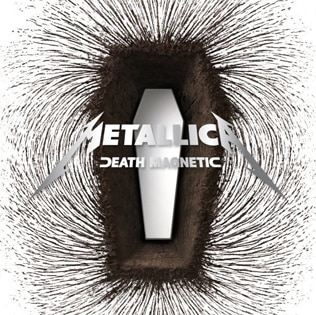
Death Magnetic (music CD)

Band Name: Metallica
Music Type: Heavy Metal
Release Date: September 12, 2008

I used to be a pretty big Metallica fan. Actually, I still am; just of their early years. After the "Black Album", as fans have dubbed it, it was all downhill for the band. Load was completely mediocre while ReLoad was just plain bad. Let's not even get into the complete mess that was St. Anger; I know it was important to the band but they really screwed the pooch there and the band became something of a bad joke to me at that point. I'm not going to mince words; idiotic fanboys who eat any crap handed to them can kiss my ass because that album was garbage.

But hey, this past decade has been very kind to both metal and regular old rock and roll. One could call it a decade of comebacks. Iron Maiden reunited with Bruce Dickinson and Judas Priest reunited with Rob Halford; both went on to make fantastic albums since the reunion. Megadeth has sowly pulled itself back from it's mistakes with "Risk". Rush kicked ass with "Snakes and Arrows". Whitesnake is back and actually doing well. Hell, in the biggest shock of them all, Van Halen has reunited with David Lee Roth. Everyone seems to have picked this decade to get their acts together. So was it time for Metallica to make a return to their former glory? Can a band that completely sold out come back from the pit?

The answer is yes.

Don't get me wrong; this album is not perfect by a longshot. But Metallica has finally shed the desire to cater to the mainstream and gone back to the roots that got them so far to begin with. Death Magnetic is harder, faster, better structured and simply more cohesive than anything the band has done in years.

In some ways, this particular album seems to echo "Ride the Lightning"; high praise from me considering the aforementioned album is a personal favorite of mine. The album is structured similarly, for instance. The first several tracks rock the doors off the joint, then the fourth track kicks in, a power ballad of sorts in the same spot "Fade to Black" was on "Ride to Lightning". While it's not a great track, it helped me hearken back to the glory days just a bit more.. Then things pick up once more. Eventually we get to an instrumental, something the band hasn't done since "... And Justice for All", before we get to the closing track.

The albums a bit uneven in overall quality, however. The first half of the album is arguably the better of the two. The first three tracks - "That Was Just Your Life", "The End of the Line" and "Broken, Beat & Scarred" - simply rock hard. Seriously, Metallica hasn't sounded this good in years. "That Was Just Your Life" is probably the best off the entire album, starting out with what sounds like a heartbeat and powering forward. "The Day That Never Comes" is decent enough, but aside from it's placement echoing the better "Fade to Black", it just doesn't get the job done. I got a major "modern Green Day" vibe from the track, of which can I just say yuck? Then we hit "All Nightmare Long", which is back into the harder feel of the first three albums with a very high sense of speed to the instruments.

The second half, however, feels weaker. "Cyanide" is fine, continuing the harder tone of the album. "The Unforgiven III" however, is not quite there. On a personal nitpick, I don't know why the band is fascinated with naming songs as sequels to "The Unforgiven" in name, but it really needs to stop. That aside, the song really is nothing special and is definitely the worst track of the album; it reminds me way too much of the sort of things the band did post-Black Album and that's not a good thing. Even Hetfeilds vocals suffer. The original "The Unforgiven" was a pretty decent track; neither of it's sequels are. On top of that, this weaker song goes on for about seven plus minutes; way too long for a song without any noteworthy points to it. If we're truly past the "Bob Rock" era, can't we leave relics inspired by it behind? This song is the definite weak link of the album and the album would have been better off if it had been cut; it barely even sounds like Metallica, or at least the badass Metallica that has resurfaced with this album.

The Judas Kiss is better, but something about it doesn't quite click. The song is a return to the harder edge most of the album carries after the last track, but it doesn't quite have the chops other songs on the album do. Said song is quickly forgotten, however, once we get to "Suicide & Redemption". Said song is the return of the instrumental to Metallica's albums, something I've been waiting for ever since they went with their radio friendly image. It's a fantastic song that you wish would go on longer; this is despite the fact that the song runs for close to ten minutes! The album then closes with "My Apocalypse". This is definitely one of the stronger songs on the album, though I don't believe it to be the best. Still, it's a thundering track that closes the album well.

One of the problems I had with the album, however, had to do with the production. I mean, why are the drums so damn loud? Also, what the hell happened to the bass? Yeah, it's there, but what happened for it to be shuffled so far to the background? Hopefully the band realized the bass was kicked to the background and keep it in mind, because it's just baffling.

Also, those lower songs of the album really do detract from it. When the songs rock, they really rock. But when they flounder, man do they ever flounder. Had "The Day That Never Comes" and "The Unforgiven III" been cut from the album it would have felt much, much stronger on the whole. Take out the solid but forgettable "The Judas Kiss" and what was left would have made for a suitably kick ass album that clocked in at a respectable fifty some odd minutes. Sometimes it's best for the chaff to be cut from the album; after all, cut songs hardly stay gone these days anyways what with reissues and collections of such songs.

The Score: Dramatic Thumbs Up

Finally, the old Metallica has resurfaced to rock the world once more. No matter how good they get from here on out, it's never going to wash to stain of those awful three albums away, but even the best bands have low periods; even if they never get quite as low as Metallica did. This album is a true return to form for the band; it's not perfect and cracks show through the lesser songs, but it's the album we've been waiting for ever since Metallica sold out. Welcome back guys; your true sound was greatly missed.

Friday, June 12, 2009

CSI Hard Evidence (video game)

Platform: X-Box 360
Also On: PC, Wii
Developers: Telltale Games
Genre: Adventure
ESRB Rating: M
Release Date: September 26, 2007

Television shows don’t get too many video game adaptions these days, unless they’re animated. The reason can range from cancellation due to declining ratings – which happened to a game that was to be based off of Heroes – to the rising costs to actually make games these days. But CSI isn’t exactly your typical series - with at least four different shows falling under the franchises umbrella – so this particular brand getting video game adaptions isn’t all that out there a prospect.

In comes Hard Evidence, just such an adaption for the X-Box 360 done in the same style as previous CSI games on the PC. For better or worse, it’s a relatively precise representation of the show. That means all the ridiculous, unrealistic things about the show translate over to the game; you guessed it, Crime Scene Investigators doing everything from interpreting the evidence to interrogating suspects to actually arresting them. All the things that irritate about the glamorous portrayal of CSI agents in the show aren’t so irritating in the game; after all, without it there wouldn’t exactly be much of a game.

There are five cases to investigate in the game in total. It’s not a terrible number by any means – the Phoenix Wright games generally hit around that number and do just fine – but the problem is generally how short they are here. Considering how light the gameplay is on the whole, the game just flies by.

If you’re a fan of the show, however, the stories of the five cases will be enjoyable. If anything, they’re really the games sole real attraction. They hold up well enough; all five feel as though they could each be an episode of the actual television show, which I suppose is actually pretty good praise. They’re fairly interesting too, with each one usually having a few interesting twists and turns. You also have a different partner with each case, all of them from the actual show. In short, there’s not much to complain about in story terms. There’s even connectivity between some of the cases; the last case of the game, for instance, involves characters and issues central to the third, for instance.

The graphics are disappointing. Generally bland, many rooms and textures look more mid-life PS2 than X-Box 360; which, while serviceable, is always disappointing. The sounds not all that big a deal. You’ll notice some familiar themes if you watch the show at all. Nothing really stands out though. Voice acting is generally fine, though the characters sound almost bored sometimes. It’s slightly off-putting but nothing too bad.

The gameplay’s generally where things go to hell, however. The foundation is solid; you search around the crime scene and different locations for evidence, use tools to collect them and then analyze them in several ways back in the crime lab. You also question suspects, which gives you valuable information.

On the surface this doesn’t sound too bad and it generally isn’t; at least until you realize that the game basically holds your hand the entire way through. When you collect evidence, for instance, you have to choose the right tool, but the game automatically eliminated the tools that couldn’t be used from selection making it all too simple to use the right tool for the job whether you know what it does or not. Questioning someone is equally as bad; dialogue does not branch in the slightest, meaning all you have to do is just ask every question when you’re allowed to ask them. Evidence analysis is a bit more in depth on your part, but it still all leads to the same place. Each case is generally a pretty straight line from start to finish. A short line too; you’ll easily beat the game within an afternoon.

The controls don’t help much. The directional pad is used for way too much in the way of menu selection in this game; never much of a problem when the analog stick can be used for it as well, but the problem is that the analog stick isn’t usable. It’s very annoying to go to a menu and forget the directional pad controls it; you could easily sit there for about five to ten seconds trying to move to another item with the analog stick before you remember it doesn’t work. Movement of the cursor also feels a bit sluggish; it’s somewhat obvious this game runs on an engine designed for computers and the general stickiness of the controls reinforces that feeling.

Replay value is literally in the toilet. Due to the unbelievable linearity of the game – seriously, it’s linear even by the standards of this sort of game in general – there’s little reason to ever replay the game or any of the cases. There are some unlockable bonuses, sure – unlocked by collecting bugs during missions – but they’re nothing really worth it; just stuff like promo’s for the game that played on TV. The Achievements are laughable as well and don’t promote replay value; there are only five of them, one for each mission, worth two hundred points each adding up to the usual total of a thousand points. In other words, there’s absolutely no reason to replay the game, ever, unless you just feel like reliving the story.

The stories in this game would probably have been better served as episodes of the show, really, because they’re the only reason to ever even play the game at all. The game barely feels like a game at all; more like one of those “storybook” games you’d find for little kids than a modern day Adventure genre game. If you’re a fan of CSI, the games worth a rental at absolute best; a fan would likely enjoy the cases and their stories. I can’t believe it would be worth a purchase to anyone though, even a hardcore fan. There’s just not much to it at all. Simply put; rent, don’t buy.

My Opinion: Skip It