Tuesday, October 19, 2010

Metroid: Other M (video games)

Platform: Wii
Developers: Team Ninja, Nintendo
Genre: Action, Adventure
ESRB Rating: Teen
Release Date: August 31st, 2010

I've been a fan of the Metroid games for a long time. I was a bit late to the party - my first experience was Fusion and I never got to play Super until just a couple years ago - but once I got into the franchise I've been there for most installments. Up comes the latest adventure for Samus, Other M. The question of whether I was going to play it would be met with a resounding "duh".

Before I go much further, I may as well address the elephant in the room and get it out of the way. There's been some outrage over this game and its portrayal of Samus. This was to be expected, really - even when she had the few story sequences in Fusion some people bitched - but it's louder now. There are calls of sexism and even claims on Big Time Gaming Sites that try and say the game has ruined the character of Samus Aran.

It's bullshit, folks, but probably not for the reason you think. The truth of the matter - and what some either cannot or or simply will not see - is that Samus never had a character. Prior to Fusion she was nothing more than a cypher; a character in the very loosest sense possible. A player stand-in. Link with breasts, basically; and that space suit is so androgynous ninety percent of the time you can't even tell. But somewhere along the line, some folks seemed to decide she was some sort of feminist icon or a shining example of a female character. This is a very stupid notion - I mean, Christ, the main reward for completing the first three games quickly was seeing her in a swimsuit, which doesn't exactly scream "feminism" - but it's there and over the years it seems to have taken root deeper than I previously realized.

What happened here is that the absence of a defined character led people to draw their own strict conclusions of what she was like. A lot of them seem to be that any emotion on her part is out of character. Wipe out an alien race without a shred of remorse? Stare down your parents killer without even a twinge of emotion? Blew up several planets without even a second thought? That's what they seem to think happened. They seem to think it makes her "strong". There's a word for that, and it tends to be "sociopathic", not strong; and while the games never went out of their way to give Samus depth as a character, she never struck me as a sociopath or much of anything really aside from someone who kicks ass on her own.

But I digress; my point is that you can't ruin a character with no personality whatsoever and what people really seem to be mourning is the loss of the notion that the character might be the way they envision her.

With that cleared up, lets move on. Now, while I've established that there isn't really a character to Samus, there are things I'm still not sure about. The game has a standard set-up. Samus receives a distress call from the "Bottle Ship" and she bolts to check it out. She finds her old unit in the military there and tags along with them. Things go south pretty quick as you find more than a few nasty beasties inside wanting to crack open your armor like a can opener might and chow down.

The games story has an obvious goal of giving more depth to Samus than has ever been attempted before. They don't really hold back much, showing her time in the Galactic Federation army and other flashbacks. Quite a few of these things feel right. It made sense to me that she would mourn the baby Metroid, as you don't tend to brush off the death of something that gave its life protecting you, unless you're a few knives short of a full block. Having her as ex-military also goes a long way towards explaining why she is as skilled as she is, much less how she got the sort of combat experience she might need to quickly make a name for herself as a bounty hunter.

Others don't feel right, however. They try to do something new with how you progress, instead of having Samus lose everything at the start, she turns them off until Adam - the CO of the Federation Squad you're chillin' with - gives authorization. It's stupid, frankly; she already has her entire arsenal, but her former boss distrusts her so she turns them off and lets him decide when she can use what? She's got access to the stuff; at the very least you'd expect she wouldn't be skulking around in lava pits for too long before deciding "screw this" and turning on the Varia feature, authorization or not. Even if you buy it, there's no reason for something as harmless as a grapple beam or low grade ordinance like morph ball bombs needing the okay from a guy you don't even work for.

Probably the iffiest moment in the games story comes about due to the series stalwart villain, Ridley. When he shows up, Samus outright freezes in fear. While it makes sense to me that at some point she was afraid of Ridley - after all, this is the creature who murdered her parents right in front of her when she was a little girl * - this late in the series it's almost laughable. By this point, depending on whether you include the Primes, she's fought some variation of Ridley two to five times now. Shock at the fact that he wasn't dead anymore, I could see; freezing in fear to the point Ridley gets in some serious damage before she snaps out of it, not so much. It might have worked for a 3D remake of the original Metroid or something, but here it just does not work and is the one scene people complained about that does make Samus look somewhat weak.

Other than the iffy points, the story isn't all that bad. I've certainly experienced better - and some lines, like Samus calling the traitor "The Deleter", are straight up comical - but I've dealt with enough Japanese product that I've also experienced far worse. If anything, that's the stories problem. It feels way too Japanese in that stock manga or anime way. The Japanese are creatures of habit when it comes to storytelling; they tend to stick within a certain set of tropes and don't really deviate far from it. This is probably why Nintendo's managed to keep relevant to those sick of Japanese storytelling over here; for the most part they've kept story as a secondary concern for most of their existence. Unfortunately it does plague Other M a bit, so I hope the next time they take a shot at a story with the series it's a bit more minimalistic. I loved Metroid Fusion - story included - so I'm thinking more along those lines.

Oh, one more thing about the story and really the game in general. It's actually nice to have a Metroid game that recognizes that the Metroid species can morph beyond the larval stage we so often see. Aside from the fight against an Omega Metroid in Fusion, this game is quite possibly the first time since Return of Samus - which is the game that introduced the evolution chart of the Metroids - that we've actually seen a form past larval. I'd very much like to see more of this, because one of the things that has annoyed me with the series is that either we've just seen the primary stage everyone is familiar with or it goes off into some completely different evolution because of Phazon or whatever.

Anyways, what really lets down the story here - and is part of why some scenes fall flat - is the voice acting. Talk about a "for the paycheck" performance. The voice actress for Samus in particular emotes about as well as the boulder out to the side of my driveway, which really hampers any emotional weight a lot of scenes might have. I don't know why they didn't just tap Jennifer Hale again. If they'd put her as Samus here and let her do more than grunt like in Prime, I imagine the game wouldn't have had this problem.

So the story doesn't quite live up, but it's not as bad as everyone's said. Should be smooth sailing from here on, right? I mean, the Metroids are renowned largely because of the great gameplay. Well unfortunately that's where the game really cements itself as a letdown. In the past, a Metroid game has been either in the third or second dimension. This time around, they try to mash the two up. It's an idea with merit; other companies have taken a similar approach in the recent past and it's worked out well. Here, they've found an approach with merit, but there's a long way to go to mold it into something truly great.

The problem is partly one of controls. The nunchuck is passed over entirely, instead asking you to turn the Wiimote to the side like an NES controller to play. When you want to switch to first person mode, you point at the screen. Cute idea in theory, but in execution it doesn't work out.

See what this means is that you now move using the directional pad. You're in a 3D space, but you can only move in eight directions. Which means you can only fire in eight directions while in third person mode. Now, I probably don't need to tell you that enemies aren't kind enough to stay in one of those eight directions. You see the problem. I'd gladly trade the novelty of holding my Wiimote like an NES remote for use of the thumbstick, thanks.

Then there's the first person mode, activated by pointing the remote at the screen. Someone had the bright idea of making it so you can only use missiles while in this mode. In case I didn't mention, you also cannot move while in first person mode. So have fun taking damage while you try to line up the lock-on for the missiles! This pretty much makes this staple of the franchise more or less useless for any enemies not designed to be beat with missiles. Worse still, there are times when you are automatically put in first person because the game wants you to notice something. Unfortunately, unlike the Prime series, things of interest are not highlighted in any way. So when you're forced to spend about five minutes in a dark place trying to find the goddamn thing the game wants you to notice, you're probably going to get annoyed.

As far as design of the game, well, this is part of what's painful about the whole thing. The mash up of 2D play and 3D has a lot of potential for future games. In fact, I really hope it's used in the future, because there are a lot of possibilities. But here it's not utilized in any interesting way, which is a goddamn shame. This manner of gameplay could easily bring forth new challenges, puzzles and ways to hide items, but it doesn't. Most of the areas are fairly straightforward, with you easily able to suss out any items in the room. They're really not all that well hidden, for the most part, and there's little reason to backtrack. You're probably going to be able to hit about seventy percent of the items in your first playthrough with minimal deviations.

Not that there's much room for deviation. This game is pretty linear for a Metroid game. Some people heckled Fusion for this, but Other M is much, much worse. There aren't a lot of clever alternate paths to be found and you won't have much difficulty finding anything. In a series known for dense maps and lots of things to discover, this is something of a shock. Couple that with very few occasions where backtracking through areas you've been to already is necessary and you've got a game that feels pretty damn short if you set aside any story sequences.

On the arsenal, there's good and bad on display here. On the negative side, some classic tricks from past Metroid games have been nerfed. You can just forget about the morph ball bomb trick, for example; you can do it if you're patient, but the game has a set height from the ground it allows the bombs to take you, making it essentially worthless. But on the other side of the token, almost all of the classic arsenal has finally made the jump to 3D. The Prime games were great stuff, but no matter how talented Retro Studios may be, there are some things they never figured out how to do in 3D. But this game finally brings out many of the mainstays that had been left in the 2D era. Things like the speed booster and the screw attack, for example, have finally made it into 3D and in the new gameplay design they work like a charm. It's something worth noting, because it's one thing this game definitely does right.

When you narrow it down, the question becomes, is there fun to be had with this game? Yeah, there is. To tell the truth, I really love the Prime games. But sometimes, it doesn't feel as much like Metroid as it should. It became something of a first person adventure, using most of Metroid lore and staples to great effect. But it also ditched a lot of what made the series popular to start with. In fact, a lot of the time I'd chill in morph ball mode in those games, since it was in the third person, which felt better than the first person perspective mode. This game, however, has more of a Metroid feel. The way this game is structured feels far more natural to the series than the jump to first person ever did and it feels like a natural evolution of the franchise instead of showing the round peg through the square hole. Sure, Retro managed to jam that round peg through, but that doesn't mean it felt like as much of a fit.

For all the games problems, I hope they don't scrap the gameplay wholesale; I'd much rather they improved upon this than going back to the first person, which I'd mostly had enough of after three games.

The Score: 6.5 out of 10

When you break it down, the game is a disappointment. But then, it had a hell of a pedigree to live up to. There's fun to be had here, but the gameplay hampers it. It might be worth a rent, but I hesitate to recommend it for purchase. Hopefully, Nintendo learns from its mistakes. There really is a solid foundation with the switch to third person, they just blew it when it comes to this game.

* With a backstory like hers, Samus should probably have a bat emblazoned on the front of her armor. She could be the intergalactic representation of Batman Inc.

Monday, October 18, 2010

Marvels (comics)

Writer: Kurt Busiek
Artist: Alex Ross
Collects: Marvels #0-4

I like Marvel just fine - and I'll follow some of their characters as closely as anything else - but I must admit that I'm not a huge fan. Part of it has to do with the universe itself. The whole thing is founded on a root concept of making the world around the superheroes as real as possible. Not only do I find this to be folly, but sometimes, things get a little too real. How could the populace be stupid enough to put Norman Osborn - whose Green Goblin shenanigans were a matter of public record - in a position of power regardless of whatever positive actions he may have done? Well, there's a certain "Tea Party" running around that's about as racist, misogynistic and hateful as any cackling comic villain; and they've got far more followers who want them in power than any sane world would permit. Shouldn't the mutant race have been accepted by now by any real world standards? Not really; ask a black, indian or so on how "accepted" they feel even in this modern era. How could the populace turn on the heroes at the drop of a hat? Pfft, look at how we turn on our heroes in real life to see just how plausible that one is.

Frankly, it gets depressing sometimes; and if I wanted that, I'd read a newspaper, not a comic book with gods and dudes in colorful tights punching each other. It's comforting to know that on the occasions that I do want to read a story like that, I know where to turn to. But typically, I'm more interested in other things, which is probably why I devour the Distinguished Competitions books on a bit more regular a basis.

What I'm trying to say is that a lot of the time it feels like Marvel takes itself way too seriously. I don't care for it. I'm pretty sure I'm not picking up a Thor book to read about his visit to New Orleans in the wake of Hurricane Katrina several years after it happened.

So, having said this, it probably comes as little surprise that this story set off every warning bell that I had. The story is through the eyes of an "Everyman" sort of character, attempting to give a man on the street perspective. So we pretty much witness the birth of the Marvel universe as the common man might see it. I read a summary a long time ago and boy howdy, just from that I could tell they were running through the events and themes Marvel built its foundation on like checking boxes off a list. They may as well have put a neon sign on the book saying it just wasn't for me.

But, as usual, my curiosity got the better of me. It had won a hell of a lot of awards in its day and the praise for it just doesn't let up. It was kind of like Marvel's own version of Kingdom Come in that it was a seminal story regarded by fandom on the whole as a classic. Oh, and it was illustrated by Alex Ross, to shoot for another similarity (man, the 90's were like a Golden Age for that guy). So while I'd put it off for years on end - any story with as many of my turnoffs as this one has often leads to me putting it off - it caught up with me eventually to the point where I just said "screw it".

In all... well, it does hit most of the things I feared it would. It also takes itself - and in turn the Marvel Universe - a bit too seriously. But the thing about it - and the reason I went to the trouble of detailing all of the previous - is that it worked out well for me regardless. Which, considering my views, is pretty high praise from me.

On the whole, Marvel touches on specific periods in time, from the capes that arrived in World War II on through the eras. For the most part, this series restricts itself; it sticks largely to the early years of the Marvel Universe, dropping the curtain just after the death of Gwen Stacy in Marvel continuity. It seems like a short period of time, but it keeps the book focused, allowing it to stick to the building blocks of the Marvel Universe as we know it. This also keeps it removed from having to deal with what would come. This story was, after all, released in the mid-90's; we all know the kind of crap that was going on at the time.

Where the story excels is that it uses the foundation of the Marvel Universe to tell different sorts of "man on the street" stories within the context of the greater story. The first of these "stories within a story" - set during World War II - seems to settle on the swaying public opinion depending on the involvement of the capes in the war. The second is content to settle on fear; the first appearance of the mutants seems to instill in regular humans an all consuming dread, mainly of being replaced as a species. The third is partly about an example of one of the first apocalyptic scenarios in the coming of Galactus and how the regular people might take that. The fourth seems split between a Marvel Universe style reflection of how easily we turn on our heroes coupled with the ease we can gain and lose faith in something we perceive.

Thankfully, Marvels isn't content with rehashing the events of the Marvel Universe and telling punchy, contained little "man on the street" stories - as it was originally intended to, which the project thankfully moved away from - instead working them into the overarching story of one man living through those it all. The main character is a photojournalist fascinated with the superheroes, watching them from the birth of that age up until his later days as an old man. This, I believe, is why it works; if it took these same themes, focused on different people in each one and separated them all like an anthology, this book might not have worked as well as it did. This also helps it avoid the pitfall of being a mere side story to the larger events going on; for the most part, there isn't a true retelling of any referenced comic. The events serve as more of a backdrop; even the recognizable heroes are less characters and more "super", which is not something a Marvel comic does often.

On the same token, there are some pitfalls with this approach, some of them really the sort that's impossible to get around when you're filtering a lot of early events through the lens of one character. As is to be expected, Marvels revolves around more than a few coincidences to get the title character in a position to witness some key events. For the most part, it's navigated by making the main character a photojournalist; after all, such a person is going to go chasing these sorts of stories, which makes it more believable that he might happen to be around when Namor or Hulk throw a tantrum. But there comes a point where even that doesn't help. So the Human Torch and Sub-Mariner just happened to slam into the same building Phil was on, causing his injury? He was in the same neighborhood when the original X-Men were cornered and managed to nail Iceman with a brick? It turned out to be his particular kids out of a whole neighborhood who sheltered a homeless mutant? When he just so happened to be there when the Green Goblin exited the apartment - Gwen Stacy saddled over his shoulder like a sack of potatoes - so he could follow Gobby to the bridge for the pivotal "death of Gwen Stacy" scene, I just kind of sighed. By the time we hit the last page cameo, credibility has long since gone out the window.

Eventually, it all adds up until you begin to have a hard time buying what they're selling. I'm used to the "amazing coincidence" in my comics. Normally, I'm not bothered. But a story like Marvels - which strives to give as much of a realistic, regular person view of things as it possibly can in a universe where Thor chills out with Hercules - has less room to get away with it by it's very nature. Unless Phil has the power of "Super Coincidence", it's hard to roll with it by about the fourth or fifth time he finds himself wrapped in a key event that his choice of job does not logically bring him to.

That said, on the whole the story is well written and engaging. The protagonist in particular is quite likable; while he does have a ridiculous knack for being at the right place at the right time, his reaction to said events is believable. When he feels sorrow at being swept up in mob mentality, it feels genuine. When he blows his top at civilians disparaging mutants late in the story, it feels earned. By the time he has become disillusioned with the public and its reaction to the heroes, we've seen how and why he has come to that. If your protagonist in this sort of story isn't good enough to invest in, the whole thing is going to fall apart; Kurt Busiek doesn't allow that to happen and deserves some props for keeping Phil Sheldon as an interesting lead in a universe where dudes get nuked and only suffer the side effect of becoming a massive green monster that smashes things. Given the choice, a lot of the time we'd probably prefer to read about the second guy.

Alex Ross manages to hold up his end of the bargain with the art. It's no secret that he uses models for his art, which has a tendency to ground some poses in reality. At the very least, it tends to keep anatomy proper. But I'm really not a big fan; hell, a lot of the time I don't feel like his style gels with the material. When he does pieces for DC, for example, he has a habit of making characters look way too old; not to mention a little out of shape, which would get some of them killed. His art doesn't have the same problem here, however. If anything, it's to the stories benefit; I suspect his work with models, for instance, is part of why the facial expressions in this story are very vivid. Not to mention the book has sort of an old fashioned painterly look, which helps sell the setting of the story in a different time.

One other thing worth noting is that this trade has some nice extras on the whole. Between each "chapter", or single issue of the mini, is a text piece by the creators and some others that were influential in regards to shaping the Marvel Universe. In the back are small interviews, along with a general list of the stories referenced throughout the story, the issue numbers included. That, in particular, was probably the most handy; I am, after all, a more casual fan of Marvel, so without it about half the references that didn't involve Galactus would have sailed clear over my head. Add in all the original covers and you have a pretty nice package.

The Score: 8.5 out of 10

There were a few things that bothered me with this story - and honestly, in any other instance the very concept would probably not have worked for me - but on the whole this is a very nice piece of work. I can see why it's hailed by some as a classic; at the very least, I'm willing to say that it's definitely one of the diamonds in the rough that was the 90's in comics. It definitely deserves a spot on the bookshelf.

Wednesday, October 13, 2010

Sonic 4: Episode 1 (video game)

Platform: X-Box Live Arcade, PSN, Wiiware, iPhone
Developers: Sonic Team, Dimps
Genre: Action, Platformer
ESRB Rating: Everyone
Release Date: October 7th-13th (released on a different day for each system)

Everyone has an idea in their head about what Sonic 4 should be. It's been about fifteen years since Sonic 3 & Knuckles. Fifteen years of expectations. No matter what they did, not everyone would be happy; especially not the unpleasable retro section of Sonics fanbase. But they pressed forward with this regardless. Now the first episode is out; all the PR speak is said and done, the whining irrelevant. Does what we have thus far deserve the name "Sonic 4"?

Yes, actually; but make no mistake, the game isn't perfect.

First off, the game looks great. Everything feels slick and modern in a way we haven't really seen in a 2D Sonic title. It's unfortunate that the looks of the zones are rehashed from previous Sonics - same for the badniks as well - but damn if they don't look pretty in HD.

The music is similarly excellent. Not all of them are on the same level as the classics - and seeing as Michael Jackson is dead, they can't exactly get his help to hit the kind of style 3&K had - but they are as catchy. Each of the three acts of every zone has it's own music, each different from the last; though later acts in the same zone may have a variation of the music from an earlier act. It's not all roses with the music, however; the regular Dr. Eggman theme for Sonic 4 is hardly the pumping tune you might expect from an encounter with the rotund doctor, though the theme for the panic mode of every boss fight is much better.

As for the gameplay, well, this is going to be the most divisive. Straight up, the physics are not exactly the same as the classics. In fact, they're more than a bit off. I suspect this game uses a heavily modified version of the Sonic Rush engine, because I recognized some of the faults that were common in that engine. Not all of the issues persist - it's fixed up enough that it does not have all of the same faults Rush did - but enough return to be noticeable. Momentum also does not work the same as in the classics and could use some tuning up; if you stop pressing in a direction, for instance, you stop moving dead in your tracks and just drop, a physics goof that really needs to be fixed post haste. To be blunt, if you're the type that takes your Sonic games way too seriously, this game will send you into the type of nerd rage that would likely inspire someone to backhand you.

Everything else, however, reeks of classic Sonic influence. The physics may have some of the problems Rush did, but the level design does not. Whereas Rush emphasised on speed over all else, Sonic 4 is slower and more deliberate. Timing your jumps and true platforming are the order of the day and the levels are built to be explored. Bottomless pits are far rarer, saving unnecessary death. Say what you want about the physics, but I'm not sure they could have changed the feel of the game as much. The level design is what makes this game feel like classic Sonic more than anything else; and it's a welcome change that helps smooth over the faults. By the time you get to Lost Labrinth Zone, the developers had clearly hit their stride. It and Mad Gear Zone are crazy awesome.

While they may have mined classic Sonic levels for the overall look of each zone, the gimmicks and a lot of hazards are mostly new. From ziplines to playing cards to outrunning giant stone spheres like Indiana Jones, there's a lot here we haven't seen before. Some gimmicks return - the canons from Sonic 3 are back - but even those don't play the same as they did before. Same goes for the boss fights. They're culled from past games, but if you think that means you know everything Robotnik will do, then you'd better watch out; when his contraption takes enough damage, he goes into a "Panic Mode" of sorts, switching up his attack patterns completely.

Everything old is new again.

As far as the amount of content you get goes, I'm conflicted. On the one hand, I want to say that fifteen dollars is too much for four zones plus a final boss rush level, all of which based on the classics instead of all new. On the other hand, this game has three full length acts per zone, plus a separate boss confrontation for each. That's the same overall amount that the original Sonic the Hedgehog gave us. I think ten dollars would have been a fairer price point, but I suppose that it's ultimately a judgement call. Either way it's well worth picking up; I would just have rather paid ten dollars for what I got and paid fifteen for Episode 2 on.

I will say this though; the majority of Episode 2 had better be new. I can handle the homages for one fifteen dollar episode, but I don't think I can justify continuing if the whole thing is going to basically be a remix of the classics. I'm paying for Sonic 4, not "Best of Sonic HD"; I'd buy that, but not under the guise of being Sonic 4.

The Score: 8 out of 10

Look, this game isn't perfect. At all. I'd very much like it if the physics were fixed to be more like the classics. But it's fun. A lot of fun. Isn't that supposed to be what matters most? Frankly it's the kind of fun the Rush games should have given me, but never managed to deliver. Sonic has been on an upward trend in recent years and Episode 1 seems to be where Sonic Team and Dimps are truly getting their legs under them. If you're a physics nazi, steer clear; but if you're nowhere near that anal, this is worth dropping the coin. Sonic seems to be in good shape again; if they can fix the physics for Episode 2, Sonic 4 could live up to its pedigree yet.

Tuesday, October 5, 2010

Sonic Rush Adventure (video game)

Platform: Nintendo DS
Developers: Dimps, Sonic Team
Genre: Action, Platformer
ESRB Rating: Everyone
Release Date: September 18th, 2007

I'll be honest; I almost didn't play this game at all. I played and reviewed Sonic Rush a ways back and the short version is that I hated it. A friend assured me Rush Adventure was better, but Rush classic was so tedious, so unfair and so crushingly boring that I ended up putting off Rush Adventure for well over a year and a half. Despite saying I'd play it, it was kind of a question mark for a while there. I may be a big Sonic fan, but I'm not looking to suffer any crappy games just because of that.

Well, I did eventually end up playing this and thankfully my friend was right. Sonic Rush Adventure is a better game than Sonic Rush. But while there's significant improvement to the formula here, some of the old problems from Rush just haven't gone away.

Visually, the game looks about the same as Rush. There hasn't really been a jump in overall graphics quality. Really, the most significant change is the stage themes. For the most part, it sticks to a more nature-y, islands feel; so you won't find any city levels, carnivals or casino levels here. The most non-natural the levels get is a machine labyrinth island and some ruins. That's actually rather fitting since, you know, the entire game takes place on a chain of islands. It does make for a more muted impression though; there's a decent chance the look of any given stage isn't really going to stick with you.

The sound is similarly unimpressive. None of it is actually bad, but you won't remember any of the themes either. It's kind of sad, but Dimps really hasn't put enough effort into the music for it to really resonate. The classics had catchy, great music that stuck with you long after. Dimps Sonic hasn't really had that. Just kind of samey. That doesn't change here. Thankfully, the worst offender from the sound last time is mostly gone; the voice clips that were so plentiful in Rush are pared down so far that there really aren't that many at all. Considering it got so bad in Rush that I wanted to inflict bodily harm on Tails, I'd say that's a good thing.

The story is nothing to write home about. Sonic and Tails somehow manage to find themselves transported to Blaze the Cats world. They meet a hyperactive, Australian raccoon named Marine who likes to think of herself as the captain of your crew. Said raccoon quickly grates on your nerves and causes trouble. Meanwhile, some pirates decide it would be a great idea to steal some precious treasures. Naturally, you're tasked with stopping them and getting back home. Blaze also shows up a quarter of the way through.

It's... well, it's passable. On the one hand, it creates a new "friend"; she may be in a different dimension and thus may never appear again, but still. She's also annoying in a way most of Sonics cast is not. On the OTHER hand, for most of the game you're actually fighting against a new villain instead of Eggman. While I love a classic Eggman confrontation, Sonic desperately needs more bad guys to fight against. In fact, I wish Sega would spend as much time trying to make new villains for him as they do trying to make new friends. So it all kind of balances itself out and the story's not offensively bad. It's just not really great either.

Of course, Eggman eventually shows up along with his Nega counterpart to be revealed as the ultimate mastermind for the "Last Story" of this game. I know this is technically a spoiler but come on; don't even pretend you didn't see that coming. This really doesn't work. He literally shows up out of nowhere for the last stage after next to no set-up or involvement, exposits his plan and is then swiftly defeated by you. There was no point to it other than to try and get Eggman involved in some way because he's the classic villain. They should have just left him out.

The gameplay is where things have improved the most; which is fortunate because that's the area that sank the last game. To get the bad out of the way first, the general way the game is played hasn't really changed. It's still less a platformer and more a runaway train of speed and fury. There's no rhyme or reason to the level design; it's simply sheer madness whizzing by at mach three. This has long been a problem with Sonic since Dimps got a hold of him; there's such a massive emphasis on the speed that levels have become both longer, barren and boring to compensate for it. The games idea of platforming is hopping from platform to platform over a death pit every now and then after long stretches of hitting speed boosters and springs. It's uninteresting; there's nothing to see or do and even if there was you're racing through the level too fast to see or experience it.

Where the level design has improved is in less reliance on nasty tricks. Rush was teeming with unfair death pits, horrid enemy placement and poor structure in general; it was common to be flying by and suddenly there's an enemy in the way with no time to react, run right into a spot where something crushed you with no time to react or to run right into a death pit with, you guessed it, no time to react. For the most part, this has either been toned down or removed.

For their part, Dimps seems to have lessened the ease with which level gimmicks can catch you unaware; back in Rush there were times I'd be going fast, hit a wall and a moving platform would crush me from above before I could do something. There aren't many instances of that here, if any. Enemy placement is still problematic, but things have at least been toned down enough so that you're usually doing something that's slow enough of a pace to notice them ahead of time. You're still going to have instances where you unfairly run into an enemy, but to fix the problem entirely they'd have to either remove enemies entirely from speed sections or completely change the engine. Obviously, neither option is really attractive - and this is the fault of the engine design's reliance on speed over platforming and physics - so at least they struck more of a middle ground.

Where the most improvement lies is with the death pits. That crap was everywhere last time. This time, they're still around, but are less plentiful. There aren't occurrences like in Rush where you'd go flying off a ramp, hit a wall, start falling, see a platform pass to the left, find yourself unable to react and hit a pit. So, they're really less of a factor this go around and Dimps wisely saves any levels with numerous death pits for either optional levels or ones very, very late in the game. I'd rather they were nixed in general, but at least you're not likely to find yourself killed for something that isn't your fault.

All this doesn't fix the engines problems, the over-reliance on speed or the iffy design of the levels in general, but it does kill enough of the frustration that you may actually end up pulling some enjoyment out of the game instead of wanting to toss the DS across the room.

On a final note, it's worth mentioning that for all the games flaws, Dimps did put in efforts to give variety to the overall package. Getting from island to island is a matter of playing a different minigame for each of the four vehicles; and they're all fun enough to keep from dragging things down. Chaos Emeralds are typically garnered from waterbike races, as well, which is a fun enough twist on the old formula as opposed to adding some poorly conceived special stages. There are even missions to undertake for Sol Emeralds or customizations to the home island.

On top of that, there's a feeling of exploration to the world map; since you're exploring the seas for islands, there's plenty to run across, including close to twenty hidden islands that are extra one act levels. They reuse art resources from the main levels - this would have REALLY been something else if they all had slightly unique art, even if it was only a matter of palette changes - but it's still more levels to race through on top of the core game. It's a great idea, just one I wish had been implemented back during the era of the classics, when level design was top notch, instead of here where it's just a bit of a diversion. But, alas.

The Score: 6.5 out of 10

This wasn't anywhere near as bad as I thought it would be. There were still issues with the game - mostly stemming from how the Rush series is done in general - but there were enough improvements that some enjoyment could actually be dug from it. There are worse ways to spend an afternoon, like playing the original. Now if only they would stop focusing on speed and put more attention on how the classics did things, we'd be in business.

Saturday, October 2, 2010

Batman: International (comics)

Writers: Alan Grant, Mark Waid
Artists: Frank Quitely, Diego Olmos, Arthur Ranson
Collects: Batman: The Scottish Connection, Batman in Barcelona: Dragons Knight, Legends of the Dark Knight #52-53

All the great stories of Batman outside of Gotham are good examples of just why Batman is easily one of the best - if not the best, period - characters ever created. You can dump him into almost any kind of story, genre or locale and he'll work in it; most of the excuse for him to be anywhere is already provided in the fact that he traveled the world before he became Batman. He's one of the most adaptable characters ever made. This volume is a theme collection in that vein, focusing on international intrigue as Batman finds himself in several different countries, dealing with threats unique to the country he finds himself in.

Personally, I love these kind of stories. I love a good Gotham adventure as much as anyone, but we tend to get those every month. Such makes the scattered times we see Batman abroad feel special, so much so that it can prop them up even if they aren't the best written stories to ever carry a Bat logo.

Anyways, this collection rounds up a few of those type stories. Most of it's old material; The Scottish Connection in particular was an original graphic novel from clear back in 1998 while the Tao story is an old one from the defucnt "Legends of the Dark Knight" series. Both are written by Alan Grant; though, Scottish Connection is notably drawn by Frank Quitely before he was a big deal. The only recent material is the Batman in Barcelona special written by Mark Waid that is sandwiched between the two Alan Grant stories; though technically it's only recent by way of when it was published, as I believe it was an inventory story that was never used before they decided to give it a one-shot.

Where The Scottish Connection takes place is probably obvious. Bruce Wayne attends a reburial of an ancestor in Scotland and notices that the coffin top had been vandalized. Now, this is a guy who decided that the proper reaction to witnessing his parents death was to dress like a Bat and smack criminals around, so of course he's not going to go party elsewhere in Scotland. That just isn't how the Bat rolls. Before he knows it he's wrapped up in an ancestral plot that sees the descendant of a family Batmans ancestors had wronged seeking revenge.

To tell the truth, it's not the best story Alan Grant has ever written. It's perfectly competant and relatively interesting, but late in the story Grant seems to get in DBZ mode, having Batman announce what he's doing. Which is fine for old comics back when that was just how they were written; but you know, even back in '98 I'm pretty sure a character shouting things like "Explosive Pellets" or "Knock-Out Gas" as he uses said tool had more or less been phased out.

The real draw of Scottish Connection is that the whole thing was drawn by Frank Quitely. At this point, his style hasn't truly developed yet, but some of his later hallmarks are still present, such as some of the sort of kinetic fight scenes he later perfected. His depiction of Bruce Wayne in particular is something I found interesting. His Bruce Wayne is practically a bulky giant that towers over most of the regular people; it's a major contrast to the lean, athletic Batman/Bruce Wayne that most artists draw. I kind of like it. The way Quitely draws him here, Wayne is a mountain of a man who looks like he could bust just about anyone up easily. Though I will note that I didn't care for how he drew the Batman costume; aside from the cape and cowl, the whole thing looks like a solid gray jumpsuit with nothing breaking it up aside from the yellow oval Bat symbol and the belt. Say what you want about the post-Return of Bruce Wayne costume, but it's still a hell of a lot better than the Scottish Connection costume.

The middle of the book is the Barcelona special by Mark Waid. While they're all pretty consistently decent stories, this one is probably written the best of the three. Killer Croc is dosed with hallucinogens by the Mad Hatter and Scarecrow before being led to believe he's the reincarnation of a dragon from Barcelonian lore. Crock seems to buy it all hook, line and sinker, so he busts out of Arkham and heads to Barcelona for a snack. Of course, Batman can't let Croc roam free in a foreign country, chowing down on innocent maidens. That's just not the proper way to treat a lady. So naturally, Batman's on the trail. Shenanigans ensue.

If there's a problem with this story, it's that it's never made clear why the inciting incident - Scarecrow and Mad Hatter screwing with Croc - happened in the first place. Why would the two honestly give a crap about Croc, much less the fact that he's more of the two-bit thug of the Batman rogues? Why did they fill his head with the story of St. George in particular, of all things? It's unfortunately never explained, leaving a question mark over why the story happened in the first place. Even a line saying that they did it just to be pricks or something would have sufficed. After all, we're talking about about a couple of Gotham's resident whackos here; when Gotham villains fill out their resumes they tend to put down "professional douchebag".

Other than that, the story's good. It's illustrated by Derek Olmos, the artwork a stark contrast to Frank Quitely before him. We're back to a leaner Batman, for instance. The colors are darker as well; there was a lightness to the coloring of Scottish Connection that I liked.

The last story present is Tao. It's another story written by Alan Grant; dude apparently liked spicing up his Batman stories with a little ethnic culture. It's generally concerned with the Chinatown district of Gotham, with some flashbacks to Bruce Waynes journeys abroad providing context for the fight against his rival. This one is a bit better written than the Scottish Connection was and while I enjoyed both stories, this one had fewer annoyances than the earlier one. The artwork is solid, feeling like a mixture of the DC house style back when it was published mixed a bit with Kelley Jones sensibilities. It's good, detailed work and definitely holds it's own with the rest of the books contents. Which, when Frank Quitely is one of the artists your work is chillin' with, isn't easy. Also, I can't explain why, but I do love me some late 80's, early 90's coloring. Wish they still did it like that on occasion.

The Score: 7.5 out of 10

Surprisingly, the quality doesn't waver much from story to story. The stuff contained in International isn't going to knock your socks off or challenge you intellectually, but they're pretty decent stories that present Batman in the sort of places we rarely see him. At the very least, it's worth a look to see some early Frank Quitely work.

Sunday, September 26, 2010

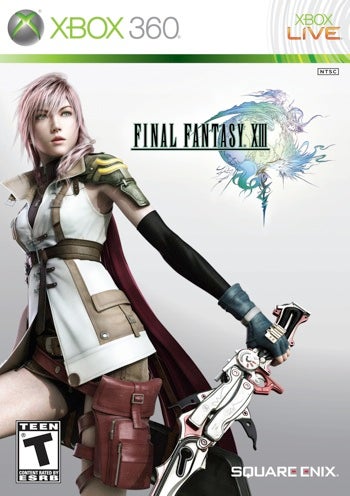
Final Fantasy XIII (video game)

Platform: X-Box 360, PS3
Developer: Square-Enix
Genre: RPG
ESRB Rating: T
Release Date: March 9th, 2010

When you're a developer with the history of Square-Enix, your reputation not only precedes you, but can also be your own worst enemy. The expectations are higher and the bar you yourself raised must not only be met, but surpassed every time. The worlds eyes turn to you, watching expectantly. What would be a small disappointment in the hands of lesser developers is a big disappointment for you. Your own standard of excellence turns against you. But for Square, they've managed to surprise and succeed, even if their decisions became iffier after the merge with Enix.

At least, they have up until now; the fact that the disappointment is the long awaited thirteenth entry in their most venerable franchise merely makes the sting that much worse. In fact, there's a feeling of ever-present laziness in this title. It starts when you realize that anyone with a firing synapse is going to immediately notice Lightning looks suspiciously like Cloud from FFVII with pink hair and goes on down the line.

The story brings a lot to discuss, so I'll get the other stuff out of the way first. The music? Still excellent. This is the first game without the compositions of Nobuo Uematsu and I'll admit I was deeply concerned. Uematsu is the premier video game music composer as far as I'm concerned and frankly, I was not at all convinced that anyone could score this game as well as he would. But the new composer manages to maintain the epic feel of the franchises music. It doesn't always hit the same highs the franchise did previously, but there are times when you'll forget someone new is working the franchise. The graphics are also befitting, taking advantage of high definition. especially later in the game.

The gameplay? Not so much. To put it simply, this game is Final Fantasy for Dummies, even moreso than Mystic Quest ever was. This game practically holds your hand the entire way through. All exploration is gone; most of the game is you running down narrow paths getting from point A to point B between cutscenes, with the occasional monster battle thrown in. There are no towns at all, either; you bring up a menu at save points to buy something and the details of the world Squares crafted, you learn from what's basically an in-game thesarus with a Beastiary attached. No minigames either; in the past Squares been criticized for having too many - a position I thought was laughable - but they overcompensated here in response.

Combat is even stupider. Literally, there is an "auto-battle" option that will use AI to choose the best moves for a given situation. You may as well use it, because aside from one battle this game is so easy you won't need to manually choose your moves until very late in the game. After every fight, your health is recharged as well, rendering potions essentially useless. MP is gone; you can cast magic as much as you want. If all this sounds like the combat system has been stripped down to an automatic it-practically-plays-itself laughingstock, that's because it is. Even worse, even the most basic options from previous entries are missing. Have I mentioned yet that you cannot run away from battle at all? Yup. Get caught, you need to fight it to the end. There are some interesting wrinkles added that would have been more than welcome in prior games - for example, you automatically have access to a monsters stats, weaknesses and so on with the press of a button, with the different statistics being filled out the longer you battle or being filled by an item - but they're not enough to save what is essentially the franchises weakest combat system to date.

All this combines to make this game an impossibly boring exercise in pure tedium. Square may as well have put us in our stroller and given us our baa-baa. They clearly don't think we're man enough for the old fashioned approach.

So now you're thinking, what about the story? The story saves it right? Square always pulls through on the story if nothing else.

No, it doesn't save this game.

Basically, you play a group of rebels fighting a government that wants to deport them because of fear they were "infected" by an evil god-like beast called a Fal'Cie. Basically, the first two chapters are your stock zombie movie "civilians sent to their deaths by the gubermint" deal. After that, they're still on the run, not just from said government, but from a destiny to destroy the world. Either they destroy it and turn to immobile crystal for the rest of eternity, or they turn into big shambling, soul-less zombies for the rest of eternity or until they're killed (again). Great choice, huh?

Here's the problem; this games story literally does not kick into gear until twenty to thirty hours in, depending on your play style. Half of the main characters are infuriating and close to unlikable for most of that time. One of those likable characters disappears for about ten hours of the game, his return being the point the game finally picks up. You have to force yourself through thirty hours of the most boring RPG gameplay ever devised just for the story to get interesting. I'm a stubborn bastard, so I stuck it out, but I can't blame folks with less patience for just bailing. There were times I didn't want to go any further myself; I had to literally force myself to move on in the opening half of this game.

The fact that it's a slow burn isn't the real problem with the story. There have been past Final Fantasy's with stories that simmered until later in the game. Unfortunately, this combines with the bad gameplay design choices to literally sink this title. If the story had a steadier pace throughout, or maybe just got to the juicy stuff quicker, it might have been able to work past the questionable gameplay. Part of what makes the gameplay as crushingly boring as it is in the early going is that there's literally nothing interesting going on; with many of the optional diversions available in previous titles gone and the story plodding on, you'll find the game as fun as carrying around a hundred pound weight for the day.

Then there's the proverbial shot to the junk that is Chapter Eleven. Chapter Eleven takes place on the wide expanses of Gran Pulse. This is literally what the game should have been. Wide open expanses to explore, side missions, all sorts of diversions, monsters that take more skill than just mashing auto-battle. It's friggin painful, because if they managed it here, what the hell is their excuse for the rest of the game? I know, I know, they tried saying the linear nature is the only way they could have pulled the games story off. To which I say they're full of crap. It's not like we didn't have a similar "on the run from everything" story in, say, the previous goddamn entry in the series. Worse still, once you move past this chapter, you're back on the damn rails again on a collision course with the finish; by that point, the stories interesting enough to hold the game up, but it's a bad comedown from the options of Gran Pulse.

Gran Pulse even brings about a potential problem for the story. By the time you get there, you've been fighting boredom and tedium for so long that it's like the games been injected with life again. If you're like me, you're going to binge and put off getting back on the story path for as long as possible. Which pretty much grinds the stories momentum to a halt in ways the previous games did not; whereas in those games you always had something to do, here you're strapped in for so long you might just end up blowing so many hours into Gran Pulse that you start losing track of previous details in the story. Of course, there's the handy in-game story recap journal, but that doesn't help the loss of momentum and the feeling of dread accompanying the thought of leaving Gran Pulse.

I think that's probably enough for this review, as I think I'm rambling now; the short version is this game both disappointed and pissed me off in ways the previous games never did, leaving me with the feeling that the total package was not worthy of the moniker "Final Fantasy".

The Score: 6 out of 10

It almost pains me to give that score, but this game just does not live up to the protracted development cycle or the hype. There is potential to this game and if the games story had, say, XII's gameplay style, we could have had a modern classic on par with the holy grails of the series, Final Fantasy VI and VII. Instead, the series is marred with a major disappointment and for the first time my faith in Square is shaken. If you're a glutton for punishment or are just really interested in experiencing the story, by all means play it; but if you're anything like me you'd probably be best served giving this game a wide berth. It does not live up to it's pedigree.

Sunday, September 19, 2010

Op/Ed: Event After Event, Event After Event, We Stuck No Breath or Motion

Are we ever truly free from events? Sometimes, it really doesn't feel like it, especially right now. After Siege, Marvel said "we're not doing major events for a while, but you might see smaller scale events among families of titles". At the time, it sounded relatively appealing, as long as it wasn't a constant thing, but it quickly became apparent that things were actually the same as ever and arguably much worse.

At the moment, Shadowland currently has the street level heroes wrapped up in an event, one that I hear isn't exactly all that hot. Chaos War is on the way. Both have a plethora of tie-ins; and from the sound of it, more is on the way. No, we're not dealing with major scale events at the moment, but things are about as bad as ever and I'm starting to have the feeling that the folks at Marvel just don't get it.

It was asked what fans thought about the smaller scale events; surprise, surprise, the fans pretty much felt that things were worse than ever with several different events. Well, Marvel responded and pretty much went on the defensive, bringing up that they didn't feel that the smaller events equaled the large ones they used to do and so on. Also, it's again pointed out that you don't need to read all the tie-ins and that part of fans problem is that they feel like they have to get them all. Not only did said answers kind of make asking the fans their opinion seem pointless - as did the later to come "vote with your wallets instead of your mouths" bit elsewhere - but it felt like they didn't really grasp what they were doing or why it was as bad. Not to mention there seemed to be a disconnect with what exactly constitutes an "event"; they may be big stories, but I'm pretty sure the "Punishment" storyline with Punisher and Daken or "Three" in Fantastic Four aren't events. If anything, big stories in the ongoings is probably what they should be doing to start with.

Even if you look at it from a basic standpoint, the problems pretty obvious. Sure, it ain't one huge event, but two to three smaller ones will add up to that level. So here we have Shadowland, which has multiple tie-ins and has taken over more than a few events. That ends the same month Chaos War starts, which embroils a whole new sect of Marvel in a crossover. So on, so forth. It perpetuates an event mode for certain parts of the line; and honestly, there's a lot of potential for this to get out of hand. Besides which, I'm pretty sure neither needed to be a big crossover with eight or nine tie-ins. It just seems like it never ends.

But the big trouble, to me, is that it feels like it hurts otherwise excellent ideas in the long run.

Look, I'll level here. I don't do events, for the most part. Especially not Marvel events. I've felt like they've been terrible for the better part of this decade. Hell, the only event with a spot for the trade on my bookshelf is Infinity Gauntlet, an event from over twenty years ago. I've gotten excited for my fair share, sure, but one of the best parts about being a tradewaiter is that I'll have a pretty good idea way ahead of time as to whether something is a pile of crap or not. As you've likely guessed, with Marvel events, this is all the time, pretty much. So I end up not buying them; if I read them, it'll be because of the library on down in the city and nine times out of ten I find I made the right choice in skipping it.

So the events suck; so what, right? Well here's the problem. The tie-ins? Never gonna escape them. They've got the branding, they often have big references or ties to things in the event and - for better or worse - they're not going to escape it. If an event sucks, who the hell is really going to want to read the tie-ins, good or not? You see the problem; and no matter how good a tie-in story may be, it's in service to the larger story. If that larger story is a dud, it's screwed.

I can only speak for myself - I'm only one guy, after all, and not representative of the entire readership - but event branding can be an outright turn-off. Especially if the associated event is a pile of crap. For example, I've not read a lick of Incredible Hercules, at least not yet. It's gotten gobs of praise, the scans I've seen have made me want it and it sounds like a good time. But those goddamn tie-ins have kept me away; I'm only now considering sucking it up and just diving in. Literally every other story arc of Incredible Hercules is a tie-in to some larger event. The launch was a tie-in to World War Hulk, then after one story arc there was a Secret Invasion tie-in, then after one more it was Dark Reign, then after one more the series closed out with the Assault on New Olympus mini-event, before we had a story arc in mini form before the coming Chaos War event. Maybe it's just me, but that is not very attractive to me as a reader and it's a lot of why I've skipped Incredible Herc thus far; I want to read about Herc's adventures, but it seems like every other one is roped into some event.

Can you imagine if Walt Simonsons Thor run had an event tie-in every other story? That's another thing. I don't think it's coincidence that it's the great runs on ongoings that are remembered far into the future. Someone is probably going to talk about something like Peter David's Hulk down the road more than most events. Hell, can anyone even fondly remember most events? Say the 90's for example. Didn't think so. So in favor of runs that are like building blocks - like how Daredevil's had ten years solid of long runs by creators before Shadowland derailed him - we go to lots of events, only on a small scale. Great plan guys; I'll be over here reading something else.

The sames likely to go for other projects. There's a Power Man mini tying into Shadowland. Whereas I might otherwise be interested in it, if only because of the creative team, I doubt I'm going to try it. Jeff Parkers Thunderbolts sounds like a good read, but come trade time, I'm going to be wary, because it seems like it's always either crossing over with something or tying into an event (hello, Shadowland tie-in). Probably going to pass on Dead Avengers (Chaos War). This is just what I can think of. It's even more ridiculous when you see Thanos Imperitive has the right idea and is running alongside these events.

Street signs read anywhere, anytime. Can you stop the bus? This is where I wanna get off.

To tell the truth, this is also part of why I don't read much Marvel. Seems like whenever I see something interesting to me over there, it's tied into something. Pretty annoying. Though it's not like DC doesn't do it; I'm convinced the overt ties to Infinite Crisis in the latter half of Batman: Under the Hood are why it's not a modern classic of a Batman story.

I think another problem with it is that the readership in general starts to become ever more reliant on events. After all, they're these big blockbuster storylines designed to at least try and thrill. When you've got big hyped events left, right and center, it's kind of hard to see that the regular titles might have a story just as big and probably even better, only with a difference in scope. Then comes the question of "what's next". After all, if you do big, then you need to do bigger and bigger. Eventually, going back to just stories in ongoings without the huge stakes seems less exciting.

Unfortunately, you can probably argue that this has already happened. Imagine my dismay when IGN's Comics crew made it pretty clear they wanted major events back. Something they mentioned that was damn near depressing was apathy for things that were going on, which mirrored a lack of a huge event. Of course, they then went on to argue their case, but that was the point that stuck with me. Despite quality books left, right and center, the lack of a huge event hit their enthusiasm for comics. Granted, when done well, an event comic is a beautiful thing, but how often does that happen?

Is that what we've come to now? Is that what comics have come to? If there isn't a huge event, it feels slow and nothing is exciting? Jesus Christ guys. How absolutely friggin' depressing. It's like comics have become the movie industry; if there isn't a huge, blockbuster event at the center of the summer, no one cares and everything's a failure.

This is what event comics have slowly done to the market and the higher ups just don't get it. So it's probably a matter of time before they come back; and really, the only change will be it going back to one big one instead of a couple smaller ones. Sales have slipped and as Tom Breevort points out, fans are idiots who talk a good game but get roped into the events every time while ignoring most of the other stuff unless it has a nifty banner. He's right to point it out; fans, after all, often have little sense come time to cash out but big mouths. Meantime, come trade time a lot of interesting series are saddled with tie-ins that lose relevance over time.

What a god damn shame.