Thursday, June 23, 2011

Sonic Retrospective: The Classics

So, as you may be aware, today's the twentieth anniversary of the release of the original Sonic the Hedgehog. So, it's his birthday, if you will.

Over that twenty year span of time, the hedgehog has had his share of highs and lows, but even with the specter of the shitfest that was Sonic '06 hanging over him, the fact remains that the good ends up outweighing the bad. Sonic's starred in some true classics of video gaming and at one point was the only serious contender to Mario. That tends to stick. Even with the beating he took in the mid 2000's, he remains one of the most recognizable characters in video game history.

Today, I start a look at the various games the hedgehog has had over the years. Where the hell else do you start but the classics? I'll very likely run through further eras in his history - though time will tell if I go through the full history over the course of the year - but for now let's get started with the original five.


Sonic the Hedgehog

Console: Sega Genesis
Release Date: June 23rd, 1991

Ahh, the original. In gaming, it rarely ends up being the best in a series - well, unless that franchise absolutely blows - but the good ones still tend to hold up. Cue Sonic the Hedgehog, a game that raced on the scene back in '91. As far as opening salvos go, the original still holds its own pretty goddamn well.

Obviously, this was the game to own on the Genesis at the time and it's not hard to see why. Colorful zones, a great combination of speed and platforming, adventure and great music. Hell, once you get Green Hills theme in your head, try getting it out. Then there were the special stages, a trippy, psychedelic area you had to traverse to get a Chaos Emerald. Collect them all and get the real ending.

Twenty years later, and the one that started it all is still a pretty great game.

The Score: 7.5 out of 10


Sonic the Hedgehog CD

Console: Sega CD
Release Date: November 19th, 1993

Ahh, now this is the stuff. When it comes to the Sonic, there are two games generally held above as the best in the series, those being Sonic CD and Sonic 3 & Knuckles. Both are fantastic games that are definitely classics, but for my money Sonic CD beats out S3&K by a small margin.

This one had it all. The introduction of Amy Rose - one of what I see as the core five characters in the franchise along with Sonic, Tails, Knuckles and Eggman - Metal Sonic, time travel, fantastic new zones, interesting gimmicks, CD quality music, awesome special stages and much, much more. Even better, the amount of replayability is ridiculous.

This one is pretty much perfect in every way. I generally feel that most Sonic games - even the classics - have as least one zone in the mix that isn't all that great. Sonic CD is the exception for sure; this game simply does not have a clunker in the bunch. Every level is varied, fun and interesting, giving some of the best variety of the series. This extends to the special stages, which picked up on Sonic 2's idea of 3D special stages and ramping it up to new heights.

More than that, the time travel gimmick puts it all over the top. It inspires irritation in some - detractors typically say it's "unnecessary" - but it just adds to the experience. It adds loads of bang for your buck - every zone has four different variations between Past, Present, Good and Bad future, complete with special tile sets and music for each - but on top of that it adds something else. You actually get to see the effects on the world.

All the prior and future Sonic games were pretty straightforward; get to the end, free a bunch of animals from a capsule and move on. Sure, you know you're doing good, but there's no effect on gameplay. Not in CD. Each zone defaults to a bad, Robotnik controlled future, but if you destroy a roboticizer in the past, the future becomes a utopian wonderland free of Robotnik or his robots. Not only does the ending you get depend on this, but each boss takes place in the future, so you're definitely going to see if you freed the zone or left it to its doom.

This kind of thing simply didn't happen in games of that era. This game had ambition. This game is fantastic.

If there's a downside to this game, it's something entirely beyond its control. A lot of fans just haven't played it. This gem was put out on the Sega CD, one of Segas numerous failed add-ons, which was out of reach of most of the people who would want to play this game. Curiously, Sega never seems to include this one in re-releases; the Genesis four have been re-packaged to the point of ridiculousness, but CD has only ever made it into a compilation once.

It really is a shame, because playing it the original way is a damn hassle.

The Score: 10 out of 10


Sonic the Hedgehog 2

Console: Sega Genesis
Release Date: November 24th, 1992

Bigger. Bolder. Better.

The first proper sequel to the original - Sonic CD started out as Sonic 2, but ended up going in a different direction - Sonic 2 just ramped everything up. This game is mammoth, having the most levels of any single Sonic game in the classic series with eleven zones; and this is before you take into consideration the fact that this one was originally going to have six more that ended up scrapped. New moves, new bosses, a new sidekick, a new 3D special stage and a metric ton of new levels. If they set out to double up on what the original contained, they pretty much succeeded.

I've got a soft spot for this one. Even when I knew in my heart 3&K was the better game, for most of my childhood I liked this one more. It could have something to do with the Casino Night Zone. It could be the plane right to an airship fortress. Hell, it could even be the final battle on what is essentially the Sonic version of the Death Star. Whatever the reason, I've always loved Sonic 2. But what the hell do I need to justify that love for anyways? This game is awesome.

Sadly, it's not perfect. While it's the biggest single, standalone Sonic game in the classic five, it also has the highest number of zones I just do not care for. I really could have done without Mystic Cave and Oil Ocean looks good but as a level is nothing to write home about. There's also Hill Top Zone, which I like but don't love; could have something to do with the insta-death pits I abhor in Sonic games.

This stings worse when you consider what we could have gotten. Hidden Palace, for one thing. That zone had a great look to it and even had the first act mostly finished early in development. It made the rounds on a game show or two as well. What happened? Sure, we got a Hidden Palace in Sonic & Knuckles, but it was a completely different deal. Then there's Dust Hill, which got as far as the concept stage and even had a few promotional screenshots, but never saw the light of day. These plus four others fell victim to Sega pushing Sonic 2 out the door to meet the holiday season deadline; meanwhile, Mystic Cave made it to completion.

Still, this game is better than the original and has a lot to offer. It's just falls short of perfect. But what the hell, at least Sonics first sequel wasn't a Doki Doki Panic game with a different coat of paint on it.

The Score: 8 out of 10


Sonic 3 & Knuckles

Console: Sega Genesis
Release Date: 1994
Note: This one is actually two games in one. Sonic 3 and Sonic & Knuckles. They were originally intended to be one game, but as usual Sega decided the holiday season was more important and pushed Sonic 3 out the door with more than half the overall game removed. Nowadays, the game is widely recognized as being one game, so despite being two of the classic five in all, I'm treating it as the full, locked on game.

Generally the last game of the classic era - though not necessarily the classic series, as Sonic 4 exists - Sonic 3 & Knuckles is a hell of a swan song.

Pound for pound, this game has the most content of any of the classic games. This one gave us the concept of the mid-boss, giving each act a closing battle, several memorable boss battles, some of the best zones in the series, a future franchise mainstay in Knuckles, playable Tails, numerous shields with special powers and so much more. The game even had dedicated paths for each character, as well as a dump truck full of secrets and alternate pathways. They even threw in a save feature that's damn near godly; once you beat the game, you can start from any level you choose, meaning they basically cut out any tedious level select codes and just gave you the goods after you stomped Robotnik.

By this point, the gameplay had been honed to perfection and it shows. Level design is top notch, the music - which even had Michael Jackson involved - was similarly great and the game was just a benchmark that the 2D iterations of Sonic have yet to reach again. There are so many cool moments and gimmicks in this one, including a zone that frequently dicks around with gravity.

Earlier I said that I personally think Sonic CD is the best - and I hold to that opinion - but this one gives it a run for its money. Like CD, there is very, very little wrong with it; all the new additions feel organic, the mid-bosses make the entire game feel like a step up from Eggmans usual antics and there's not a bad time to be seen.

Well, mostly. Remember that rule I talked about earlier? You know, the one about how most Sonic games have that one terrible level that sticks out from the pack? This one does too. It's called Sandopolis Zone and despite the numerous good ideas present, it just doesn't work as well as the rest of the pack. But you know what? While I hated it as a kid, today I think it's an okay level. I think that says something when the worst level of the game is merely okay.

The Score: 9.5 out of 10


That's it for the classics. The next look back at the past of Sonic will likely tackle the main Game Gear games. Or I could just go for the Genesis era spinoffs next. Time will tell. When I do get to it, I hope you'll join me.

Wednesday, June 15, 2011

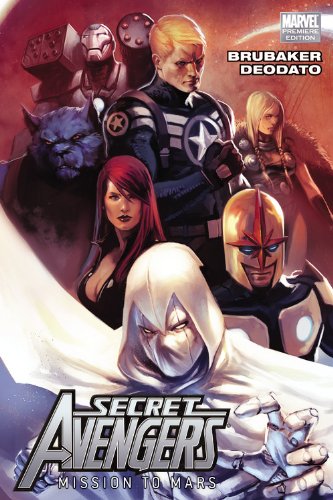
Secret Avengers: Mission to Mars (comics)

Writer: Ed Brubaker
Artists: Mike Deodato Jr, David Aja, Michael Lark
Collects: Secret Avengers #1-5

Ed Brubakers run on Secret Avengers was shockingly short. Around when the second arc actually kicked off and the closing issues of said arc were being solicited, suddenly the word was that he was going to be off the book. When this happened, Brubaker admitted something; that he didn't feel like he really fit with the team concept as well, or something to that effect.

I bring this up because I would have gotten that feeling from this book even if he hadn't said it.

For most of this volume, this doesn't necessarily feel like a team book. For the first four issue arc, the focus seems to fall largely upon Steve Rogers. This is, to some extent, expected - he has, after all, been writing the Captain America book for the better part of seven years as of this writing - but it goes to the point where at times this feels more like a secondary Steve Rogers book with some allies tagging along on adventures than the team book it's supposed to be. Steve is in the vast majority of the scenes in this comic - I'd say about three quarters - he's clearly in charge and it comes down to him to stop the threat of the main four issue arc.

There are a few scenes spotlighting different characters - Black Widow and Valkyrie have a few decent scenes in here while Ant-Man does help in saving the day - but the other half of the team is just there. Nova himself has like one scene, Beast barely plays much of a role and both War Machine and Moon Knight have few lines, much less anything to actually do. I can barely remember anything War Machine said or did and I just read the damn thing. Fair focus on the team at large, this ain't.

The last issue barely has any of the team in it, as it's a bit of a "revelations" issue, which sheds light on a mystery or two introduced in the first four issues.

This is not to say the story is bad. It's well written, as expected, Brubaker portrays a likable, capable Steve Rogers, what little we get of the others feels on point and it's a pretty well told tale. It's by no means a crash and burn. But it's not what I expected and it's not necessarily as advertised. Team books aren't supposed to be like this.

None of this is to say anything bad about Ed Brubaker, however. Sometimes, some writers just cannot gel with some projects. Shit, I like Matt Fractions work, but he and the X-Men haven't been the best of fits. If nothing else, it's worth noting that Bru clearly knew something wasn't working and decided to bow out of the title a little bit later. Besides, Bru's done enough damn good projects to build some leeway; hell, this book is proof that even when he isn't a hundred percent on he can still pen a damn capable title.

So, hey, I've barely talked about the art. This isn't a knock on it though. It's damn good stuff. Deodato's work is great enough, but man, something just really clicked with me in regards to the fifth issue. It's simpler in linework and the coloring feels a bit older. Think seventies, eighties era comics. Since it's essentially part flashback to years past, this gives the issue an extra little oomph, to me. I'm not exactly sure what the breakdowns are for this issue - the art looks Lark-esque, but it could be mostly Aja for all I know and the credits sure as hell don't make it clear - but it's sharp stuff.

The Score: 7 out of 10

Even on an off day, Brubaker pens a solid tale. Really, if this were a Captain America comic, I'd probably say this were a seven point five or a solid eight. But it's supposed to be a team book and it didn't necessarily feel like one, so I feel like I need to knock a point off or so. But don't be fooled, this is still a decent read. I wouldn't say it's one of Brubakers best, but if you're just looking for a dependable read out of the post-Siege Avengers relaunch, I don't think you could go wrong here.

Just don't expect a lot of focus on the guys not named Steve Rogers.

Friday, June 10, 2011

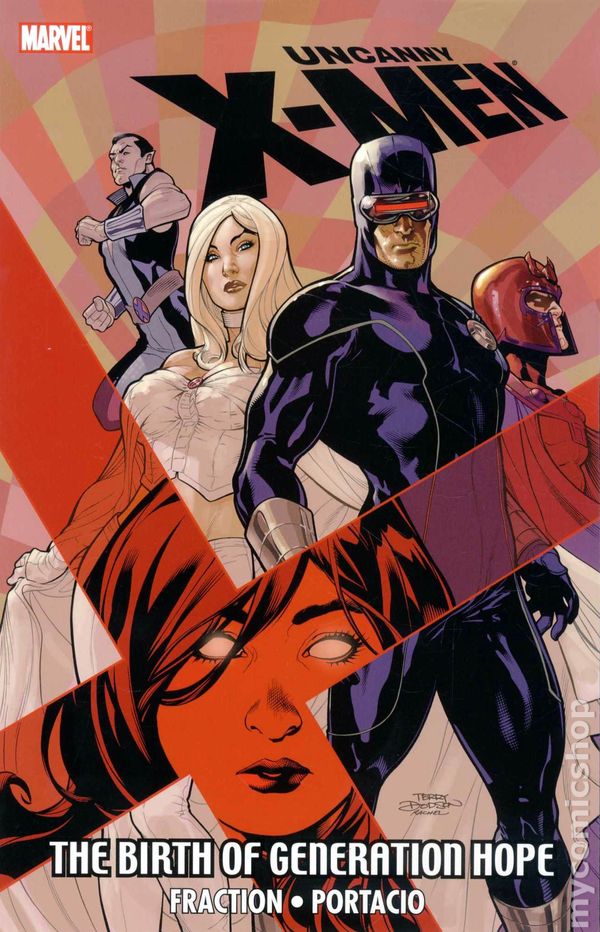
Uncanny X-Men: The Birth of Generation Hope (comics)

Writer: Matt Fraction
Artists: Whilce Portacio, Jamie McKelvie, Steven Sanders and Olivier Copiel
Collects: Uncanny X-Men: The Heroic Age, Uncanny X-Men #526-529

The more I read, the less I think Matt Fraction and the X-Men really go together. Fractions a great writer; one of the things he does well is getting character across. But the problem I'm having is that his run here has been either boring or plodding. The X-Men have had periods where there isn't much action in the past and that's okay, but when done right, it should not bore you.

To be fair to Fraction, in this volume, at least part of the problem just straight up is not his fault.

It actually starts out well enough with the Heroic Age one shot. It feels like a bit of a closer to one age and the bridge to the next. Some Second Coming fallout crops up while the X-Men are brought back into the Marvel Universe as a whole.

The Cyclops segment starts promisingly, with Beast flat out quitting this time over the way Scott has changed the team. Cyclops is broken up for all of twenty seconds, however, before he's out in the Savage Land fighting dinosaurs and being told what a great guy he is by everyone from Steve Rogers to the President. He's even given a damn medal, for chrissakes, for "fighting for his country" and "the peace and safety of the world". The fact that he led all mutants to secede from the US and literally stopped caring about a goddamn thing to do with the world at large - now, where were they during Siege again? - is of course completely ignored, like it never happened.

Scott Summers, ladies and gentlemen; jerkass stu of the decade.

The other two segments fair much better. We see Hope acclimate to her new circumstances now that she's back in the present. Meanwhile, Beast chills out in the zoo waiting for his girlfriend to show up. Thus far, Hope is proving to be rather believable to me; a teenage girl treated like a messiah whom numerous people have died to protect is not likely to be able to just suck it up. There are going to be issues. While the Beast segment is rather touching, as he tries, fails, fails some more and then succeeds in comforting a young mutant scared of the concept of extinction.

Part of what makes it all work is the art. I'm not including Whilce Portacio in this, but I'll get to him in a bit. The stars of the show here are Steve Sanders and Jamie McKelvie. McKelvies work is just stunning stuff; hell, Hope actually looks her age for once. I will say the way he draws eyes is a little weird to me, though.

Sanders work is my favorite of the two. There was a lot of grousing about "horse head" Beast, but man, once you get used to it, it's a look that really works for him. Sanders is fantastic at facial expressions, body language and just plain storytelling with his art. This man needs work on SOME kind of Marvel series, now. You know, considering Marvel pulled it's dick move of canceling SWORD at issue five.

The main arc is where it all goes downhill, but it's not necessarily the fault of the story. The writing isn't going to win any Eisners, but it's not necessarily bad. It carries the feeling of a cool down arc, which makes sense after the huge brawl of Second Coming. Not a lot of action to be found.

Instead, it focuses more on character arcs. The four issue arc focuses mainly on Emma Frost and Hope; for once, we're getting a reprieve from the Cyclops show. I quite like Emma a lot, especially since she was brought over to the side of the angels. She's always had an edge to her; a high class, tough woman. I like that she's never lost that, despite devoting herself to doing good. She still makes morally questionable decisions - and her story in this arc focuses on them and her attempts to fix them - yet she's still likable despite her douchiness.

For the record, her and Scotts relationship is about the only thing I like about Cyclops these days.

Then there's Hope. The mutant messiah. After Second Coming, she's weary from the pressure of being the "Mutant Messiah", as Cyclops has basically trumpeted her up to be. Since she grew up in the future, she never knew her family, or much of anything except running from death. So now she goes in search of it. Through it, she finds some manner of drive to go after the five lights; the first mutants "born" since M-Day.

But all that's fine; no, where this volume sinks is its art.

I try to find some good where I can in things. But sometimes, it's just not possible. The art just feels so goddamn 90's that it's distracting. Facial expressions are way off, storytelling continuity is borked - there's a sequence where a character jumps off a roof in a suicide attempt, but instead of dropping, the next panel it looks like she's jumped thirty feet away from the roof and has traveled upwards, like she's flying - there are way too many lines. I'm sorry, it's just bad. There's no other way to put it.

Occasionally, there's a couple good pages. But for the most part, the artwork is pretty ugly. It actively detracts from the story and frankly, if I knew it was going to look like this I would have passed outright.

The Score: 6 out of 10

The art kills it. Only two of three segments in one issue are actively good artwise. The script is the only reason the score is as high as a six, but while good, it's not able to carry this book through the bad art.

I think this might be my last X-Men book for a while, unless something really catches my attention. My foray into the current X books has turned out to be a bust. Just don't even bother here.

Thursday, May 26, 2011

Fantastic Four: Extended Family (comics)

Writers: Numerous, including Stan Lee, Roy Thomas, Dwayne McDuffie and more
Artists: Numerous
Collects: Fantastic Four #1, 81, 132, 168, 265, 307, 347, 384, 544, Fantasic Four (1998) #42

Here we are with another theme collection. This one was brought about by the events of Johnathan Hickmans run on the property, where a plot twist leaves the team one short and in need of a replacement. So naturally, a collection of other times heroes filled in on the team is in order.

I generally like these sort of collections. You'll recall The Black Casebook went over well with me, while Strange Deaths of Batman was also a decent time. They tend to have their problems though. This one is no exception; and in this case, it kind of hampers the enjoyment.

So, there's no real story to this volume. Each issue is part of a different era doing its own thing. But reading this, it quickly becomes rather obvious that the Fantastic Four do have quite the "extended family". Members over the years have included Crystal of the Inhumans, She-Hulk, one of the Ms. Marvels, Luke Cage, an Ant-Man or two and various others. Fitting, really, since this is the team that helped give birth to the Marvel Universe as a whole. They should have connections from all over the place.

Of course, many of them vary in quality, but on the whole the issues within are at least decent. The writing is usually serviceable to good, with the same to be said of the art. Though if either of the two suffers more than the other, it's the art. You can tell right off when you've reached the issues from the early nineties. The art takes the predicted nose dive; and Invisible Woman tarts it up in your typical impractical sleazy 90's costume, this time with the four of her costume cut out to show her skin and cleavage because of course. The art picks back up again with the last issue collected, but man some of these are rough.

The problem, then, is that there are some odd choices. That's part and parcel for these kind of things - not everyones favorites will be collected and some deserving issues will be passed over for iffier ones - but this volume trends odder than usual. For example, why, exactly, is Fantastic Four #1 included? It's the first of the series, but it doesn't fit the MO of the book. It's the formation of the classic team; it has nothing to do with "other members". So, while more Jack Kirby art is never a bad thing, it's an odd choice to include over another issue.

More pressing is the volumes tendency to show us the formation of a team, but not any real adventures. Fine early on - the more compressed nature of old comics allows for an adventure to be packed in with this - but later it starts to become a problem. She-Hulk, Ant-Man and others show up to help Johnny when others are missing, but we never get to see the assembled team in action?

Then there's the well known "New Fantastic Four" story with Wolverine, Ghost Rider, Hulk and Spidey. We get the first issue, of which the majority consists of the old team being taken out, with the new team only forming and getting the gist of the problem at the very end. We never see them do anything. Perhaps an issue a bit further in where we see them do something would have been more appropriate? Just a thought.

So in this way, the volume doesn't give is the full picture of the advertised adventures of alternate teams. Not exactly something in their favor. The volume really needed a few issues from later in a couple of the teams tenure. Hell, if they insisted on the first issue of the "New Fantastic Four", they could have included the second in place of reprinting the very first issue.

The Score: 6.5 out of 10

This collection could have used a bit more attention to its contents and for that the score is hurt. It's not a terrible collection, just a bit more flawed than some of it's contemporaries for obvious reasons. Worth a look if you can borrow it from a library or friend, but not really worth buying.

Thursday, May 19, 2011

X-Men: Nation X (comics)

Writer: Matt Fraction
Artists: Greg Land, Terry Dodson, Alan Davis
Collects: Dark Reign - The List: X-Men, Uncanny X-Men #515-522, Nation X #1-4

There's a question regarding where the X-Men franchise has been going in recent years that bears asking. If the X-Men have turned their back on Xaviers dream and what they stood for - mainly striving for peaceful co-existence with normal humans, understanding, an end to fear of differences and other points - are they still the X-Men? As they go further and further down the rabbit hole, I find the answer to be a resounding no; and it makes the adventures of the team even less appealing than before.

Here's the thing, I don't really care about the main adventures of the X-Men anymore. A couple years ago, I came to a realization that the only two runs on the flagship books I've ever truly cared about were the legendary Claremont run and Grant Morrisons game changing run on New X-Men. Anything else I find interesting tends to be the side books, the occasional arc in a major book that doesn't connect to the status quo much or the ones off doing their own thing with next to nothing to do with the core book.

There are numerous reasons I borderline hate the current status quo and unfortunately this volume is a pretty good encapsulation of why.

First, lets get the general overview of the plots out of the way. Opening the book is the Dark Reign - The List one shot. You may recall that I had a few choice words to say about the collection of the numerous one shots, but in the X-Men collection this fits much better. It feels like more of an epilogue to the conflict in the last volume, when the Dark Avengers and X-Men squared off, which led to Namor and Emma basically telling Osborn to take a hike. Osborn didn't take too kindly to that, so he sends a big monster to presumably eat Namor. This goes about as well as you'd expect. It's a pretty okay one shot, though there's no mistaking the fact that the vast majority of what makes it worth the time is the art by Alan Davis.

Then there's the main arc, Nation X, which eats up about eight issues of Uncanny X-Men. Basically, after the events of last volume, the X-Men have set up their "Utopia" on top of the floating Asteroid M. Now they have to figure out the nuances of how to survive. This goes on for eight issues, with a few flashes of interesting conflict with in but largely decompressed nonsense.

The back third of the book is dedicated to the Nation X anthology series, which focuses on characters acclimating to the new situations or just little vignettes; some are bad, some are good, a few are even pretty great, but that's par for the course for any anthology series of any kind. You can't really review this kind of thing, but I can at least vouch for a pretty decent batting average of good to bad.

First off, the Nation X arc is horribly decompressed and not terribly interesting. For eight issues we find our cast dealing with various problems on the island nation, from things like fresh water and food to where to put the result of a hundred plus mutants who presumably need to take a dump from time to time. Some of this is fine, but it's the focus of over half the arc. It's not exactly the most interesting reading. Fraction tries to keep things exciting with a few conflicts - and a hint or two at future arcs - but he doesn't necessarily succeed. This isn't the most riveting stuff ever put to paper.

Second, the art is pretty yuck. Greg Land is far from the worst artist to ever grace the pages of comics, but he isn't exactly good either. Some poses just look outright ridiculous, characters will look off, a character will be drawn as if their suddenly screaming out of nowhere when a second ago they had the calmest face imaginable. Land has his problems and he illustrates six of the eight issues in this collection.

The Dodsons are far better, but their contribution to the collection as a whole is a drop in the bucket. Even they aren't without their issues. I'm not sure how much of this was called for in the script - Cyclops even has a line describing it - but when we go into Emmas mindscape, it's the dullest thing ever. It's all just white. We've seen characters psychically traverse another characters head in the past and it usually reveals something about them. Apparently Emmas mind is nothing but white space. It makes a two issue conflict within a larger story blander than it should have been.

Worse than the dullness, however, is the fact that we're treading even further into territory that makes the X-Men almost unrecognizable. There's obviously potential to be mined in the whole "M-Day" scenario, but it was patently flubbed most of the time. A lot of what we see ends up turning the X-Men into a group so far removed from what the X-Men always stood for that the editors themselves feel it necessary to come out and defend the direction every interview or so.

It starts with Cyclops. I've never been a huge fan; even back in the Claremont era he was as dull as a block of wood. This is an obvious problem, since he's frequently a key player in X stories. The one time he became remotely interesting was during Morrisons X-Men run. Almost immediately afterwards he became a dick, which has been the norm since.

Ever since the X offices went out of their way to try and demonize Professor X, Cyclops has been portrayed as superior and this perfect leader. But here's the thing; he's not. It's just that no one who ever questions him lately is taken seriously. He's basically a Jerkass Stu, to go with a TV Tropes term.

Here's the thing though; no matter how much the writers try to portray him as cool or the bestest leader ever, it ends up backfiring on them because Cyclops is, long story short, a douchebag who makes questionable moves. In what reality is publicly locating just about every goddamn mutant left on a small, sinking asteroid a good idea? One orbital bombardment later and barring Colossus and Armor, the mutant race is dead. Letting Magneto on the island? Yeah, sure, he puts on a nice face, but the guy is a goddamn rattlesnake; he is going to bite you eventually. How many times has he pulled this? Professor X even states this outright. Nope, let's let the genocidal, terrorist maniac on the island, that'll be great for morale.

But this is all okay, because Cyclops has a plan. He admits he's kind of making it up as he goes along, but you have a dream Professor X and he has a plan. Except, you know, that's the exact goddamn opposite of a plan. But he's not called out on this because he's friggin Cyclops.

I'm not even joking. No one really dissents. He's like King Cyclops and almost all of his little subjects fall in line. It's kind of striking when Wolverine - the guy who would basically question every move Cyclops or Professor X made - basically says "he's making tough choices and he's right".

There are people who speak up, but they're written like they're heels for doing it. Professor X immediately suspects a trap when Magneto arrives, but his outburst is treated as if it's unnecessary and over the top. Despite the fact that, you know, Magneto has pulled this "I'm good now, really" business before. Even Beast isn't wild about some changes, like Magneto being on the island, and gets a lecture from Iceman for his trouble. He - and his departure - is written to come off as a whiny douche instead of a fair portrayal of someone disillusioned with the choices the fearless leader has made. Half the island barely even notices he left.

Beast himself even brings up how he was left to be tortured until the "time was right" for a rescue, presumably for the greater good of the mutant race. This is spliced between scenes where Cyclops has dropped everything to perform "psychic surgery" on Emma Frost once it's been deemed a viable option. No one questions this hypocrisy or pats Beast on the back. The mutant race comes first, except when it doesn't.

So many things about this arc just come off as false because of it. Magnetos sudden, practically out of nowhere change of heart just doesn't jive with how he was even a short time ago. He even goes so far as to say he was wrong about mutants being the future. The X-Men themselves have basically become a glorified military group and represent everything the group has ever fought against, yet it's handwaved away as necessary and made in the midst of tough choices.

All this and the fact that Cyclops is content to put all of his eggs in one basket with the "mutant messiah". Then there's something that isn't brought up in this arc in particular, but is an important bit; the fact that Cyclops - leader of the X-Men - has personally sanctioned a kill squad. So what we're reading is another step in the destruction of everything the X-Men ever stood for; they've essentially turned their back on Xaviers dream because times got tough and the only people who care are Professor X himself, Beast and Nightcrawler.

As it stands, the way mutants have been acting under Cyclops stewardship, there's plenty of reason for regular humans to be scared of them. Hell, they now have Magneto chilling with them on their island. The guy that's committed numerous terrorist acts and wanted to wipe humans out if they didn't go with his demands a time or two. Add this with them declaring their own nation of super powered mutants just off the coast of San Francisco and it's a miracle missiles aren't headed their way.

Worse still, the status quo this book begins to explore not only hurts their appeal, but it unwittingly sends several bad messages. It's no secret that the X-Men have long been a concept following the general theme of fighting against hate. Racism, homophobia, all that stuff. The editors and writers freely admit it. But now, mutants are segregating themselves because the government doesn't agree with them, they have kill squads, they stop caring about advancing their standing in the world and they generally start acting like a military group.

So what message is this sending? Should the blacks all be congregating on their own island nation? Should gays have a kill squad to take out their enemies because they might be harmful to them? Should hispanics form themselves into a military group? You can't have it both ways, but Marvel wants to take this team in a darker, grittier, the-end-justifies-the-means direction while still trying to make the team a metaphor for race relations. I don't think I need to tell you it doesn't work and this volume does nothing but make it worse.

Matt Fraction is a talented writer. He is. He's deservedly a big star in comics. But the X-Men do not seem to be gelling with him. I don't know if it's the direction not agreeing with him or what. But this is not his best work. Which isn't a big deal - even the greats have off days - but it's disappointing. He is unable to make any of this work, if only because of the fact that this status quo he's working with - and advancing - is anathema to what the X-Men have always stood for.

As you can tell, the writing is completely unable to make this work on several levels. But at the core of it all, it all comes back to the point I made earlier; this arc is just dull, dull, dull. There's always the chance this could be made to work by using action to keep you from thinking too hard on it, but there are maybe two real action beats in the whole eight issues that are relatively short. The subplot that contains said action scenes ends up having nothing to do with the rest of the arc. It's just overlong, doesn't seem to go anywhere and if anything seems to just be buying time until Second Coming, the crossover that sees the "mutant messiah" return.

On the plus side, Second Coming doesn't have to do much to be more interesting than this, that's for sure.

Obviously, I don't like where the franchise is - and has been - going. I don't think that's all of this volumes problem - I've tried to list everything I find wrong with it here, but I'm sure I've rambled way too much for it to be concise - as the writing in general isn't up to snuff, but it is an issue. But if you like where the X-Men have been going, you may like this more than I did; it's still very dull and bland on a writing level and the arts not that great on six of the eight issues, but it does advance the status quo, for good or ill.

There's definitely a positive or two here though. One very good thing about this - whether you like the direction or material or not - is that this is a thick, thick volume. It contains, after all, the eight issues of the arc, The List one shot and the four Nation X anthology issues. That's thirteen issues total for thirty dollars SRP; you can even get it much cheaper online. Considering Marvel's really annoyed me with their habit of four issue trades lately, I feel I must applaud them when they give us a volume with good value for the money.

Now if they'd just do it more than once in a while, we'd be set.

Some of the various short stories that make up the Nation X anthology are pretty good too. Though, as expected, the quality varies. But there aren't many that are outright bad, which is kind of a win for any anthology.

Another good thing is, well... uhh... did I mention the one shot was drawn by Alan Davis? That's always a plus. I think I'm about out of good things to say already.

The Score: 5.5 out of 10

Skip it. For the love of everything good, just skip it. Matt Fraction just couldn't pull this one off. It's inoffensive reading, but it's also pretty bland and dull. Not worth the time or money unless you really, really like where the franchise is going. I don't, which makes the volumes problems even worse for me.LinkLink

Saturday, May 14, 2011

Dark Reign: The List (comics)

Writers: Brian Bendis, Jason Aaron, Greg Pak, Rick Remender and numerous others
Artists: John Romita Jr., Alan Davis, Adam Kubert and too many others to count
Collects: Dark Reign: The List - Avengers, Daredevil, X-Men, Punisher, Secret Warriors, Hulk, Wolverine, Amazing Spider-Man

Hoo boy. This book. There are so many problems with doing something like this. Let's you and me talk about why.

Essentially seven or eight one shots with an over-arching narrative, the conceit is that Norman Osborn is making a list. He's checking it twice. He doesn't really care who's been naughty or nice. He's just gonna shoot you in the face. Or more likely have you shot by someone else, since he employs a bunch of murderers as a team of Avengers.

I'm not really going to get into the individual quality of each one shot; as you'd expect, some are better than others and this really isn't the point of the exercise. There are about three different ways you can try and run something like this. The first option is to have the overarching storyline take precedence; this is the approach that would have actually necessitated a collection like this. The other way is to be light on the connective tissue and have each writer treat it as an extra chapter of whatever ongoing they presumably work on. The final option is to try and do both; this route very rarely works out, becoming a jack of all trades, but master of none.

This book takes the second approach, which results in a scattershot group of one shots that barely connect.

Talked up as an important part of the overall Dark Reign status quo, they try to tie everything together with the overall plot of Osborns list. It doesn't necessarily work, because only about three chapters actually involve the list itself or Norman actively going after his target. Each issue does involve him, but as mentioned earlier they're all basically extra chapters of different books across the Marvel line. Different vibes and tones follow, with the overall series not feeling like a cohesive whole. There are a few important scenes to affect the status quo, but it doesn't really work as it's own story, which is a big, big problem.

Since what we're left with here are extra tales of the given character or team, we're left with about what you'd expect for most of them. Quite a few of them involve the ongoing events of a given book, which means that divorced from said context they mean little. Why is Norman pissed at Namor? Who knows, but he's damn sure going to throw a hungry monster at him. What's Osborns beef with the Punisher? You might be able to take a guess, but if you haven't read the events of his ongoing at the time, you won't have the concrete answer. Why the hell is Hulk not the Hulk? Same deal.

In short, most of the one shots assume familiarity with the ongoing events at the time. The hope is to get your readers hooked and want to read those books. But without a given context, what we get is going to mean little to most of the people who read it. Even with people who are reading several of the given ongoings, few of them will have been invested in all of them.

Worse still, the entire exercise - and even this collection - is unnecessary. While we could have been in for an interesting story if Osborns downfall came from the fallout of the last one shot, Spider-Mans, it's ultimately inconsequential. The Siege event would come soon after, which led to Osborns downfall in a way that had nothing to do with the events portrayed here. Sure, Peter damn sure screwed up Osborns PR, but things would have come to the same conclusion with or without him. Which leaves the appeal to the writing and art, which are both admittedly pretty great.

As for the collection itself, as you can guess, each individual one-shot is also collected in the collections of the associated book. They fit in much better there and the events are separate enough that removing them from the rest doesn't hurt them. So, with the one shots all available elsewhere and the overall story remarkably flimsy... the point of this collection is what again? Aside from the obvious goal of a little extra money coming in from the sales of this too.

Really pointless volume overall.

The Score: 5 out of 10

Let me be very, very clear here; this score is for this volume as a whole. As a separate entity, this collection fails to be worth the time or money in every way. Many of the individual one shots themselves, however, are very good; several well written and several very, very well drawn by some of comics best. But you're better off reading them in the associated collections. There's absolutely no point in wasting the money on this thing. It means absolutely nothing if you're not already reading the given comics; and if you are, that means buying this volume would have you paying for the same comics twice.

By all means, skip this; you'll get them when you get around to the volumes of the ongoings they're collected in.

Friday, May 13, 2011

Astonishing X-Men: Exogenetic (comics)

Writer: Warren Ellis
Artist: Phil Jimenez
Collects: Astonishing X-Men #31-35

It's funny how in the back, Astonishing X-Men is referred to as Grant Morrisons legacy. Really, the only reason for that is because Whedon was the only one who didn't seem to wipe the slate clean of what Morrison did; you know, considering Marvel shat on Morrisons run immediately after it finished. He kept the characterization of several characters, but it was a far more conventional book than what Morrison did. Which isn't a knock; Astonishing is generally good and one of the few X books worth reading.

Then Warren Ellis came on board; thankfully, the good times have kept rolling with this one.

After M Day, there was that whole "No More Mutants" thing going on, so most of what followed that was a bunch of "mutants band together" stories, dark secrets from long standing characters and so on. After a while, someone figured, hey, the mutants are in one place now and no one has tried to commit genocide in the past three months. Why not take a crack at it?

Except this time, said genocidal maniac is pretty good at manipulating genetics. Expert at raising the dead is apparently on his resume as well. Thus, we have dead X-Men returning to try and kill the ones that are still breathing and somewhere along the way the villain decides it would be a slammin' idea to drop a clone of a living island on them. As you can probably guess, the X-Men find all this to be in really bad taste, so it's time to give the villain a stern talking to!

If all this sounds familiar, congratulations, you've read a few X-Men stories. Typically, a plot like this would be a sign of trouble; it's been done so many times before that it can be pretty difficult to imagine anyone wringing anything new out of it. How many times have the X-Men faced a foe who wanted nothing more than to wipe them from the face of the Earth? I lost count a long time ago.

Apparently, there's still things to do with the concept and Ellis opts for subversion of the typical way this kind of thing plays out. There's no high minded validation for this, no excuses or delusions of protecting humans or the like. This attempt - this complex, planned attempt on their lives - stems from nothing more than sheer pettiness from a source close to home. It's a very human reaction, when you strip away the flesh and blood sentinels and the zombified islands. Jealousy and spite leading to unreasonable backlash.

In the midst of it, the notion of just how outside they really are is tackled. As pointed out, the X-Men aren't exactly wanting. Most of them are beautiful or handsome specimens in colorful spandex with fantastic powers. As much as they bemoan being freaks, do they truly even know what it means? It's an interesting question, despite how far the villain took things. But it's one that's even arguable from both sides. Cyclops himself asks Wolverine, bemused, "There are people who hate us because we're not outcast enough?"

As for the dialogue and writing, you know what you're getting into with a Warren Ellis scripted comic. Somehow, some way, he's going to get in his traditional brand of snark. To varying degrees, he manages it across most of the cast here, but unlike other writers, he manages to work it so they still feel in character. That's something some writers struggle with, even popular ones.

The scripts obviously tailored to give the artist plenty to draw, as well. The hook of the story - dead mutants being reanimated and controlled - allows for a bevy of typically unavailable foes. This is played to the hilt, with Jimenez getting to draw the Brood, Krakoa, flesh based Sentinels and more. There's even a crazy rescue from the wreckage of a ship in the midst of atmospheric re-entry from space.

Do I really need to say Phil Jimenez does well with it? Oh, alright. Seriously, he's fantastic. Great at illustrating the large scale, the small and everything in between. Seeing him tackle things like the Brood is a treat and overall a fair amount of what makes the whole thing worthwhile. Oh, did I mention he's good at facial expressions, too? Jimenez was a perfect fit for the arc; overall, Ellis writes a sharp script, but it's the artwork that helps push the book that much further.

All this in mind, I must grant that this volume isn't exactly going to shake the Earth or anything. This is a solid, enjoyable read, for sure. Still, many seem to see Astonishing as a strictly marquee, high tier title. It comes with high expectations for some. Personally, I enjoy Astonishing in that it gives me a relatively self contained fix of the X-Men, away from all the bull the franchise is frequently embedded in. It hasn't really done me wrong yet. But some seem to view it different - hell, some think it should have ended with Whedons departure, which is retarded, because could you imagine if Thor ended when Jack Kirby left? - and it's worth bearing in mind.

The Score: 7.5 out of 10

I doubt it will win any awards, but as a continuity light, contained dose of the X-Men, this is hard to go wrong with. Worth a read if you're sick of all that mutant messiah mumbo jumbo and just want to see the team fight a bunch of superpowered zombies. Even if you're not, it might be worth it just to see Cyclops get a bit of a verbal smackdown.